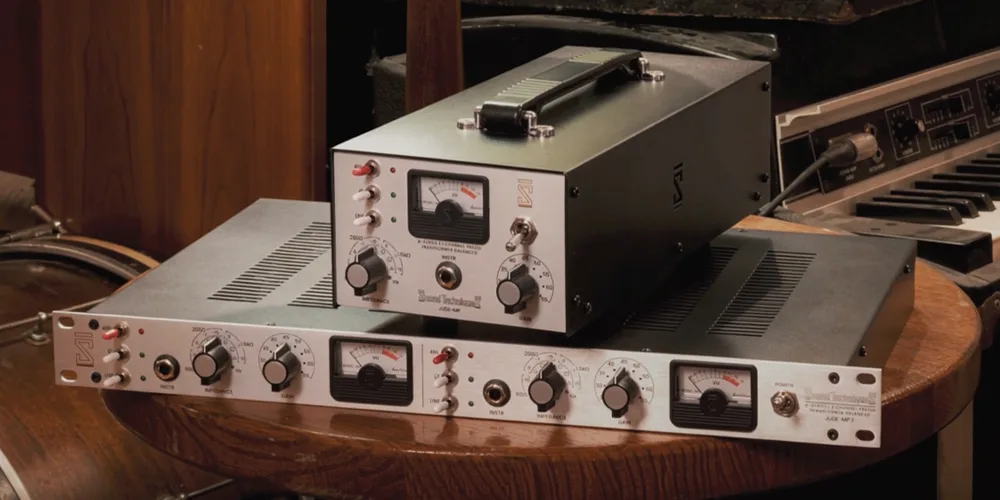
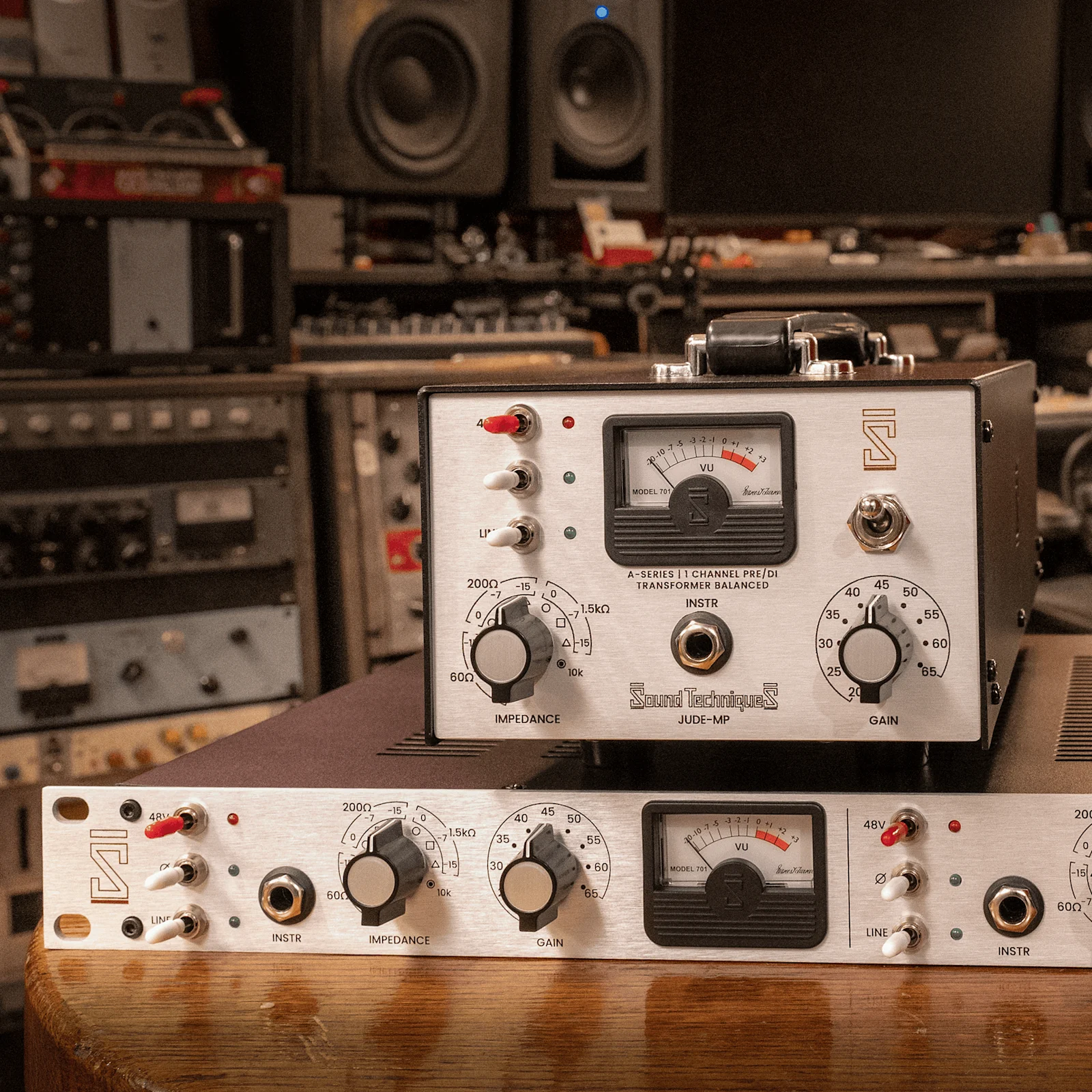
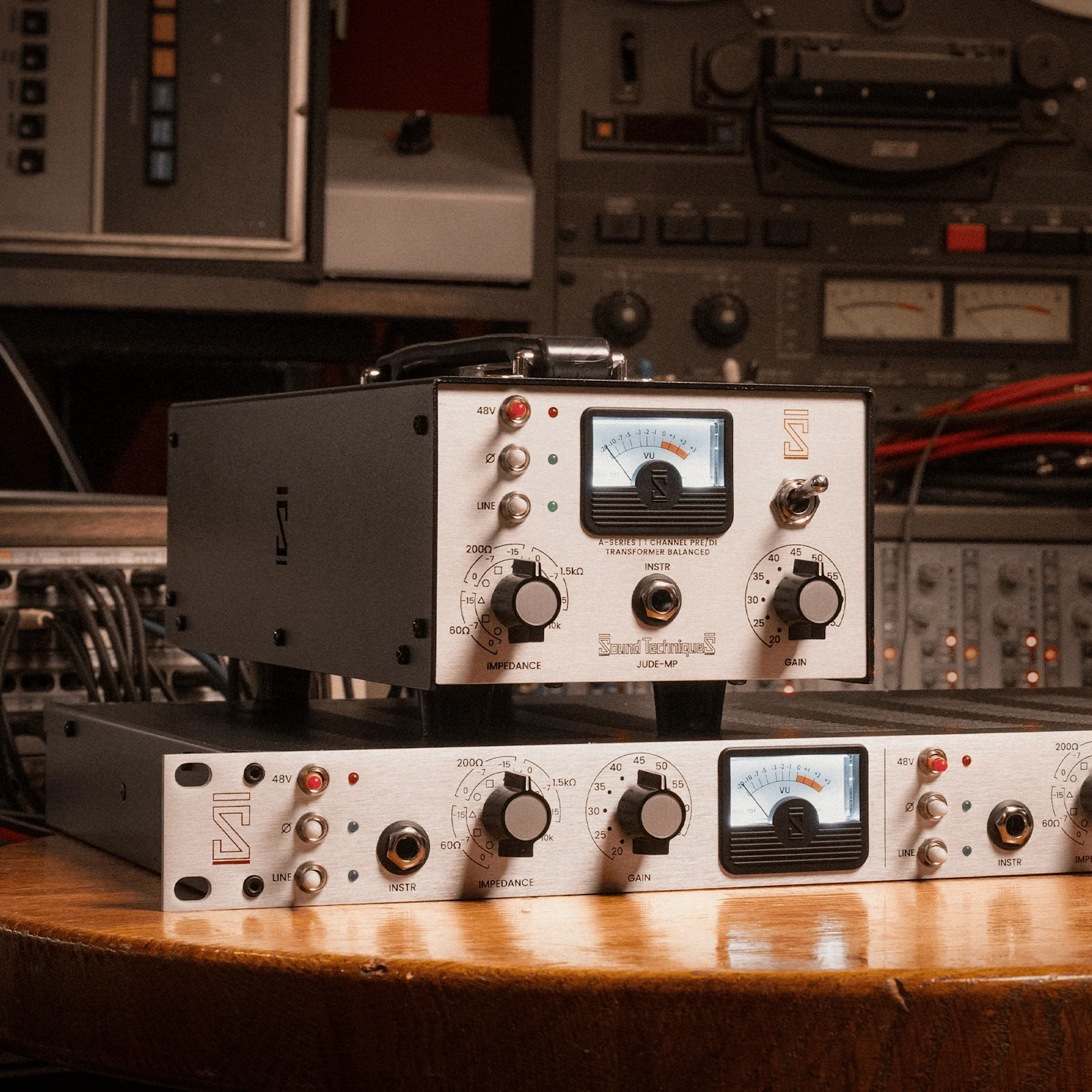

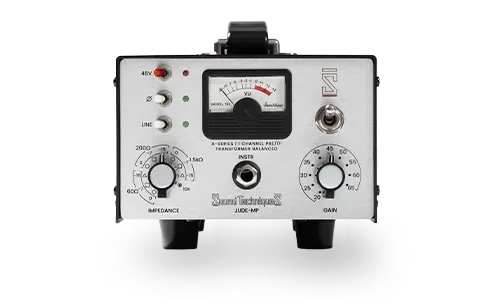
Single-Channel
Dual-Channel
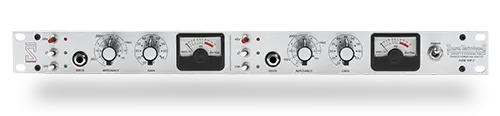
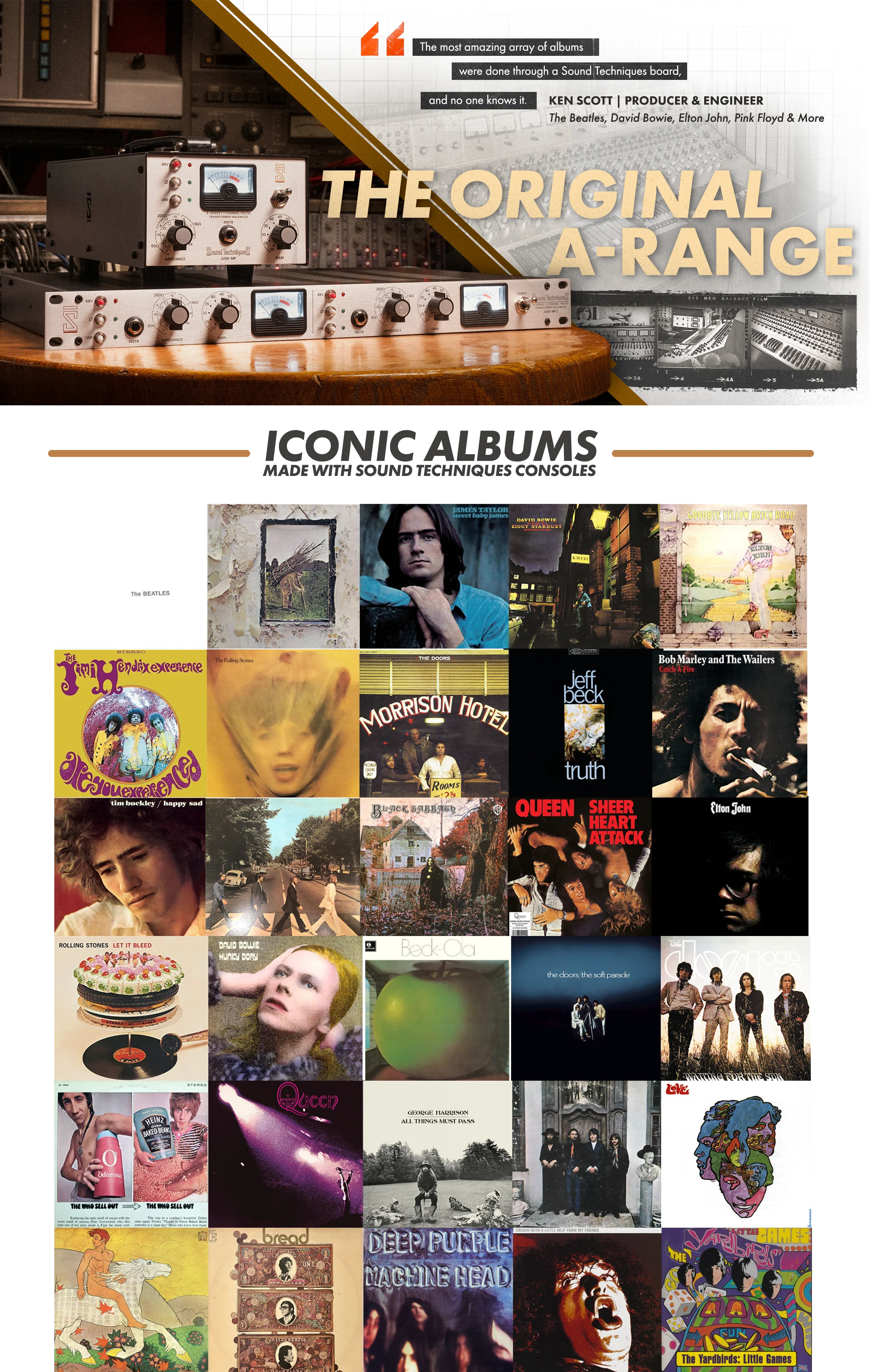
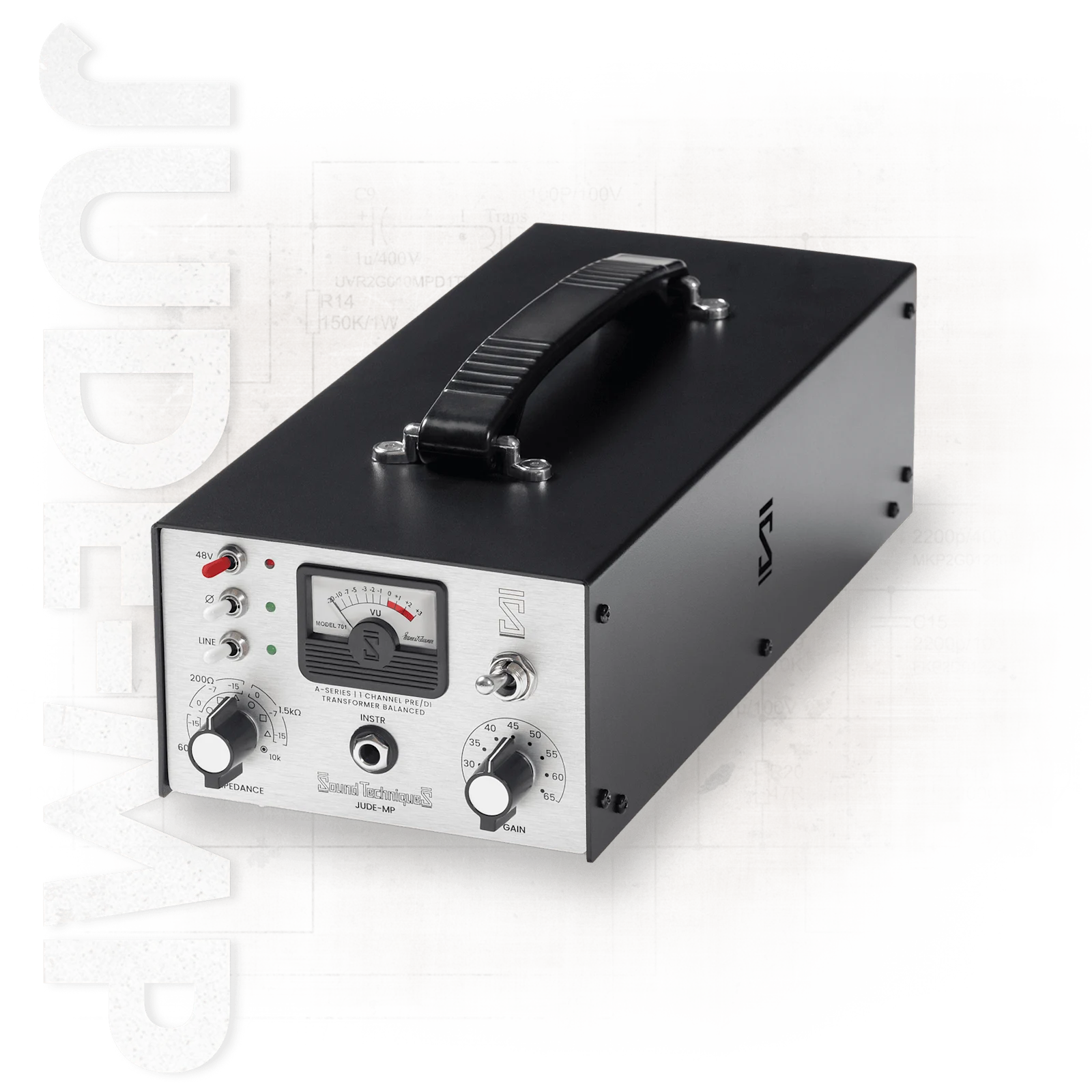
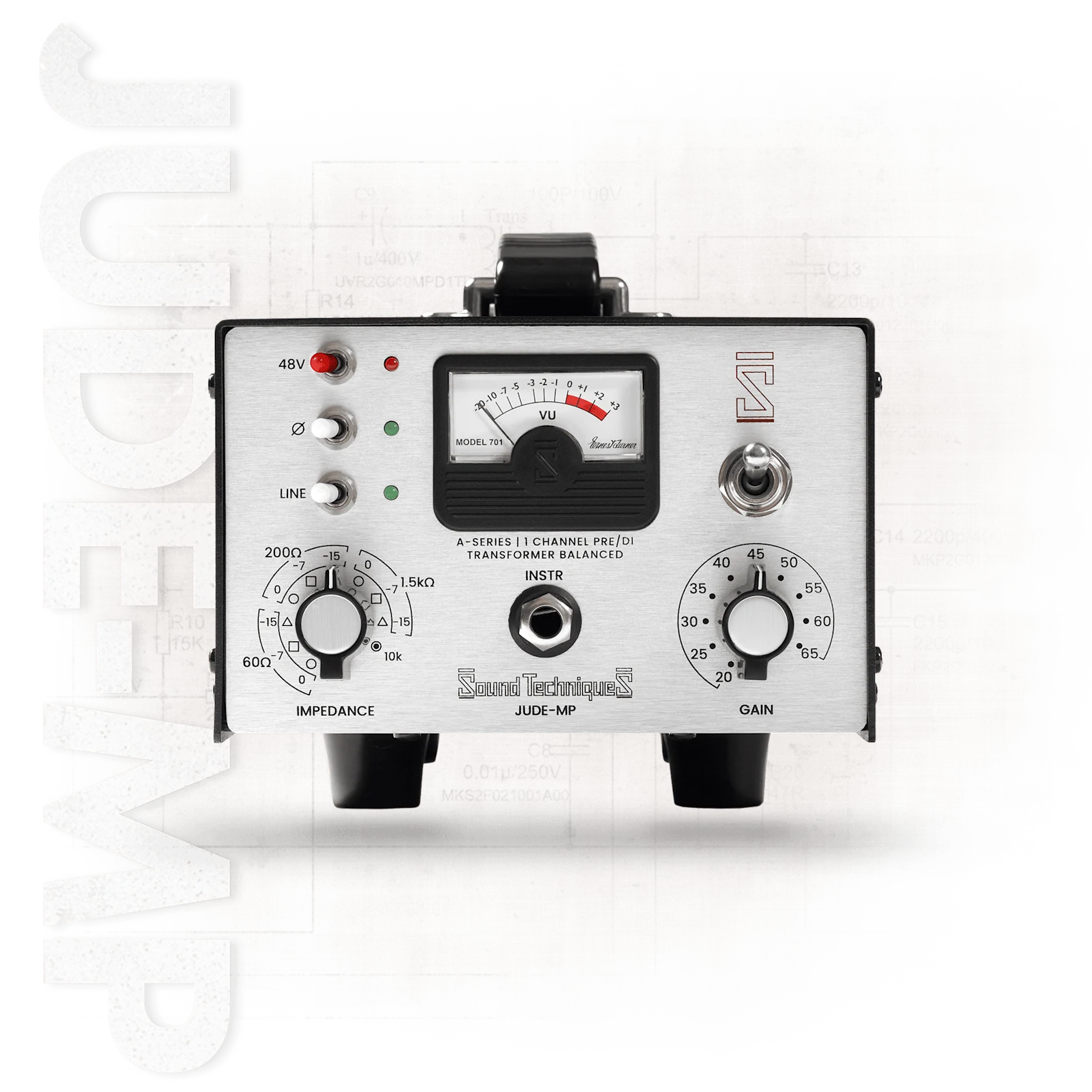
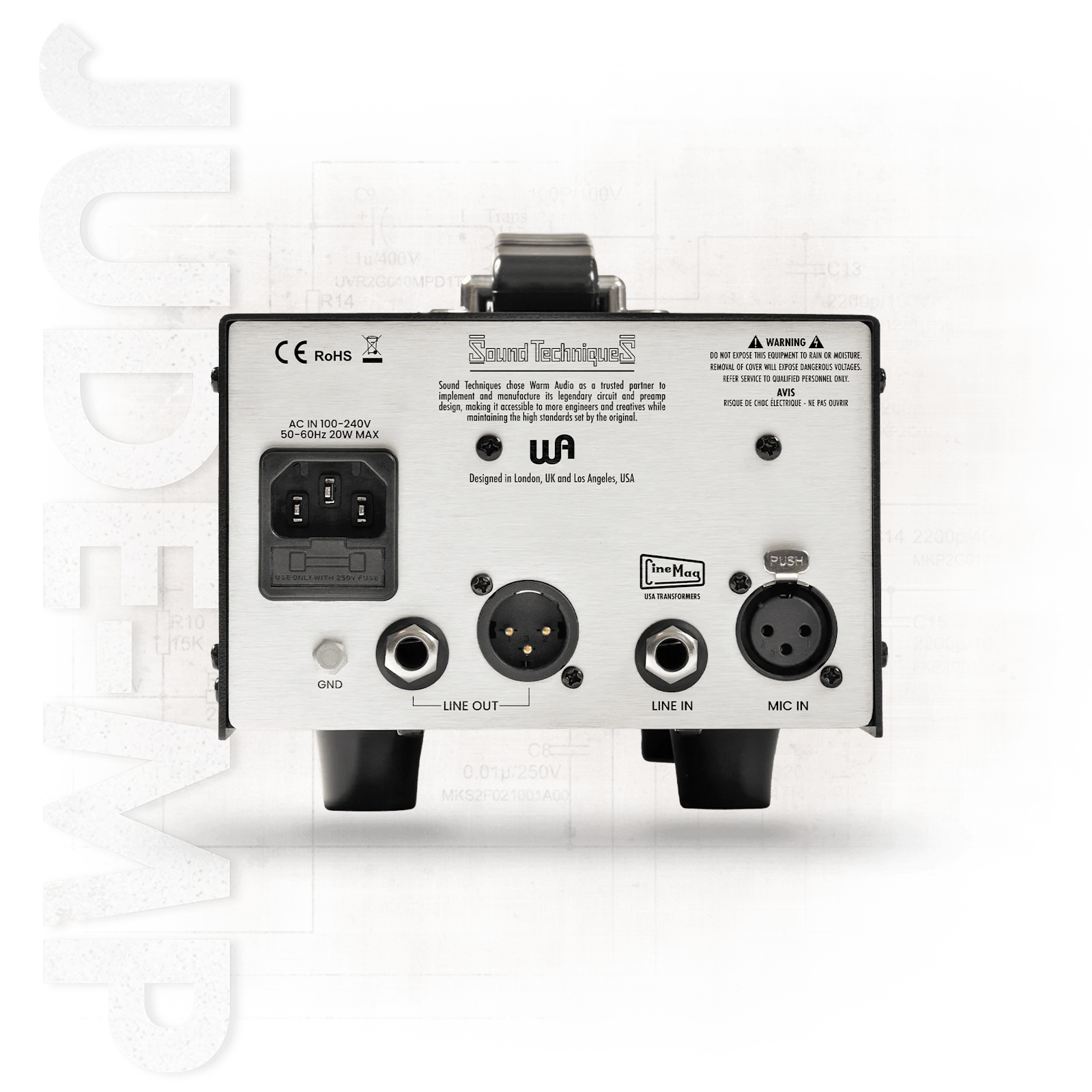
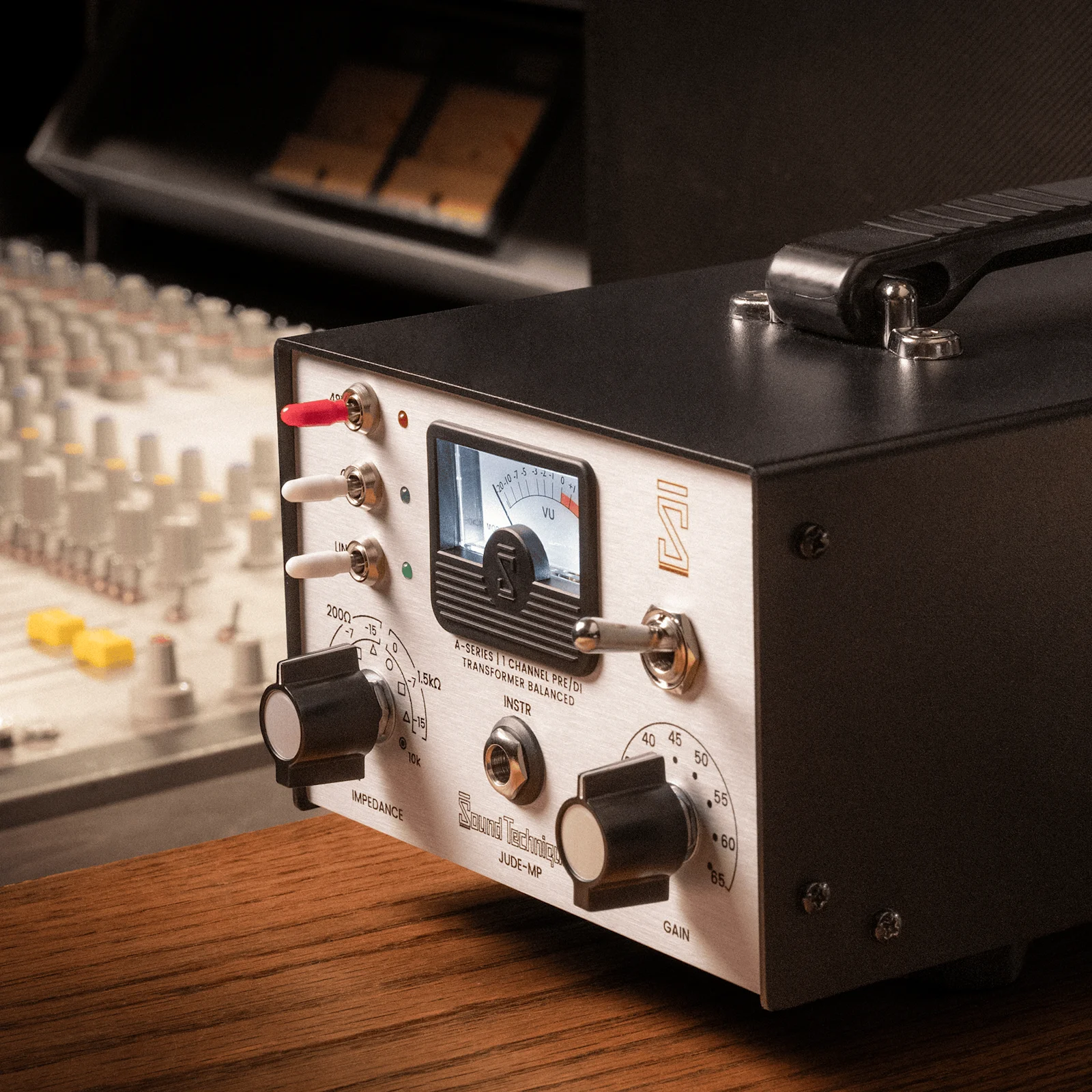
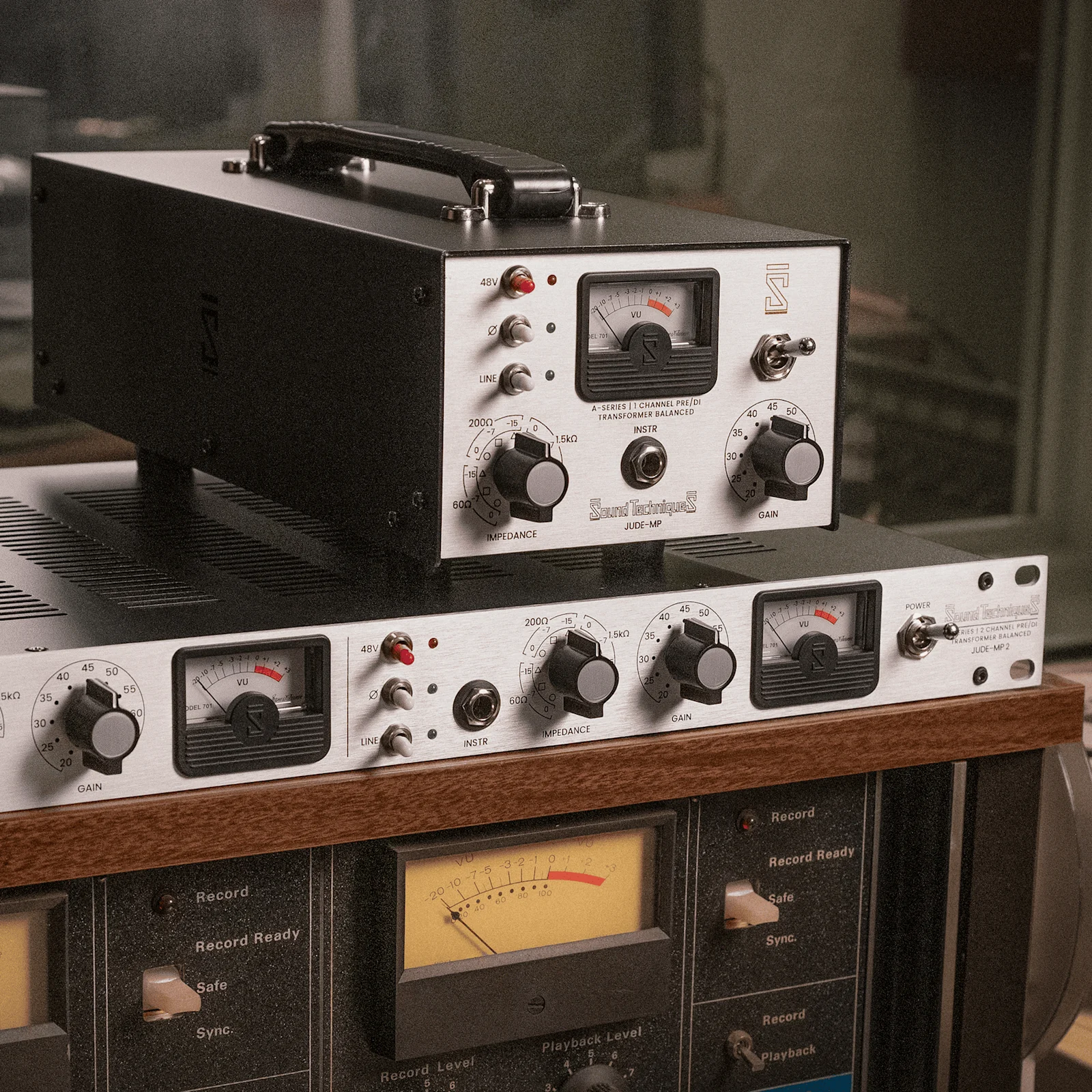
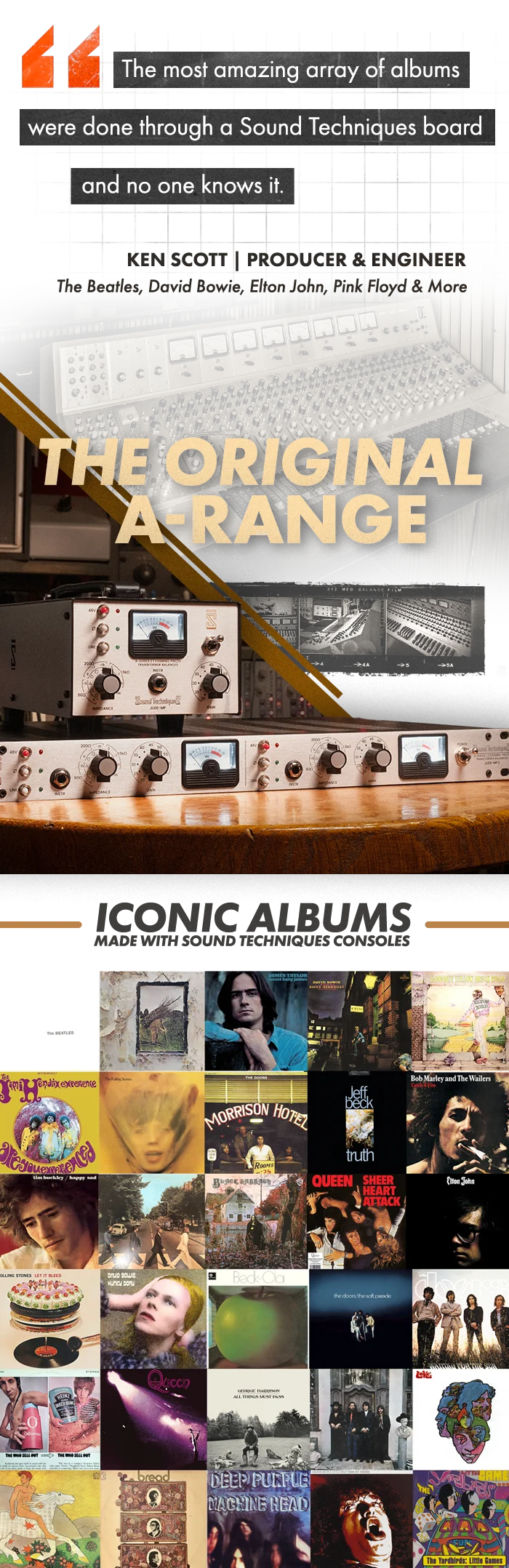
The Jude & Stereo Jude are authentic reproductions of the original Sound Techniques "A-Range" custom console microphone preamps that helped define the sound of legendary recordings at some of London's most famous studios such as De Lane Lea Studios and Trident Studios. Created in direct partnership between Sound Techniques and Warm Audio, Jude accurately delivers the exact microphone preamp circuit designed by Geoff Frost from those historic London consoles. With original dual-discrete 3035 Class-A amplification, Geoff Frost's proprietary Z-Match impedance circuit, custom-spec CineMag USA transformers, and meticulously hand-wired construction, Jude has the unmistakable depth, punch, and musicality heard on classic recordings by David Bowie, Elton John, Queen, and several Beatles recordings including “Hey Jude”.
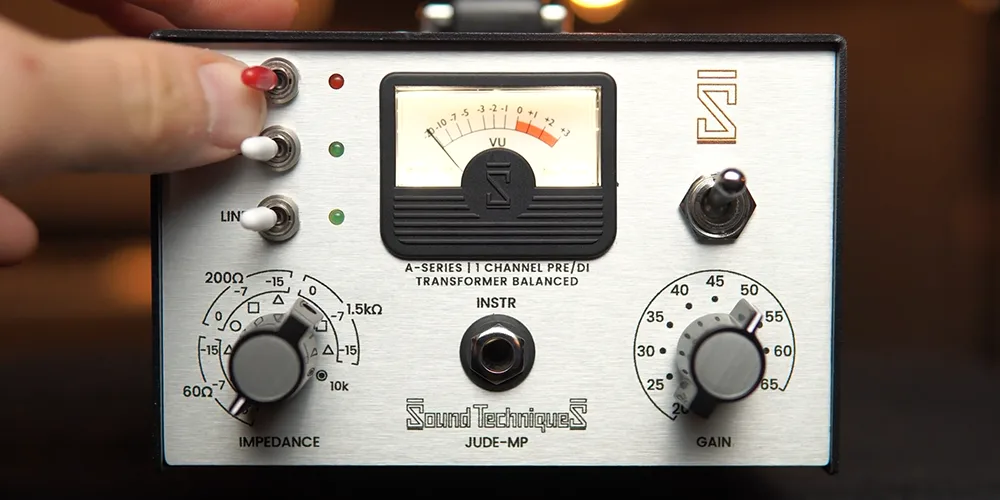
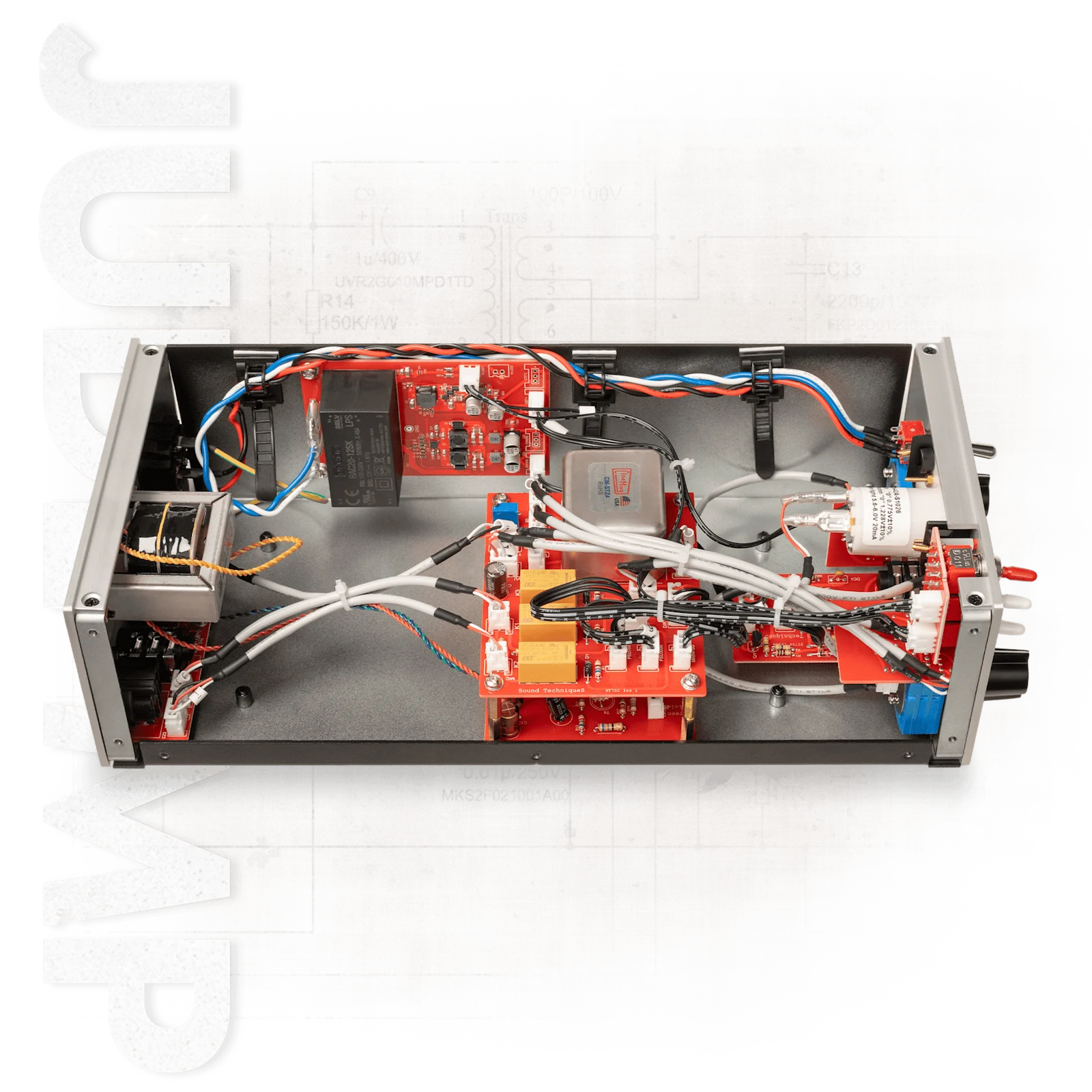
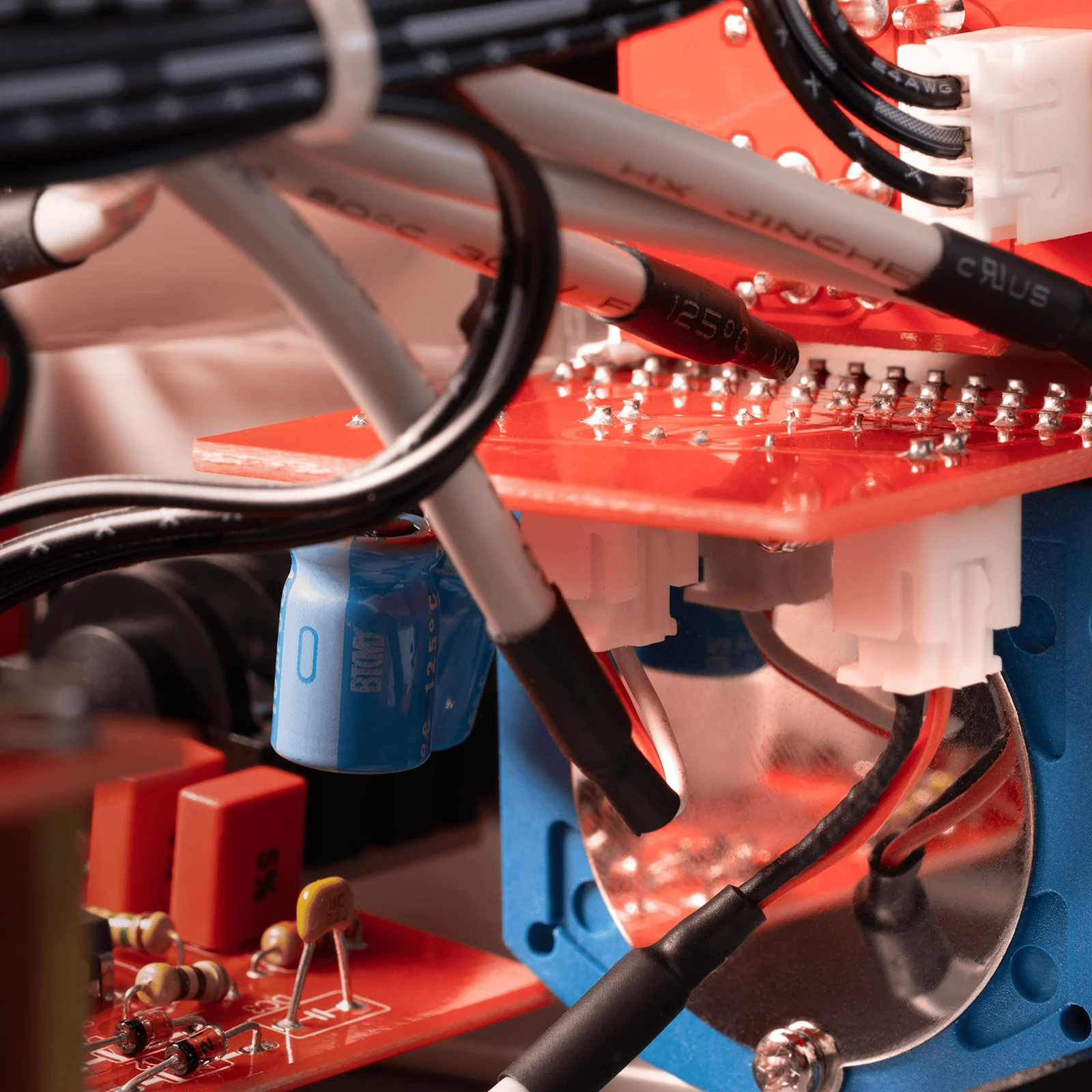
Built to original Sound Techniques specifications, every Jude channel preserves the complete signal path and tonal flexibility that made the "A-Range" consoles legendary among engineers and producers. The exclusive 9-position Z-Match control allows each channel to optimize the relationship between microphone and preamp, offering nine distinct tonal interactions that shape gain, transient response, frequency balance, and harmonic character with virtually any microphone. Combined with premium Wima and Nichicon audio-grade capacitors, carbon resistors, custom CineMag USA transformers, and Warm Audio's meticulous hand-tested construction, Jude delivers the authentic British console sound once reserved for a handful of the world's most influential recording studios.
 Golden-Era Vocals
 Woody Acoustic Guitar
 Punchy Piano
 Cutting Electric Guitar
 Rich, present vocals that sit up front in a mix without any high end harshness.


History

Key Features

Specs

Components

Reviews

Sound Samples

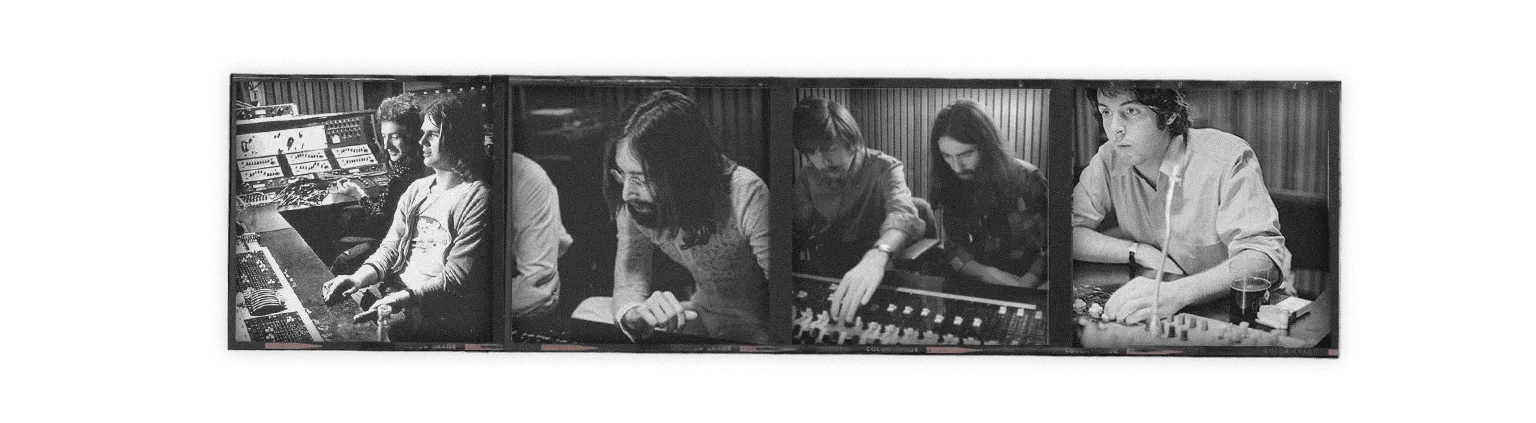
Founded by Geoff Frost and John Wood, Sound Techniques began building consoles for its own Chelsea recording studio before Geoff Frost began constructing custom desks for other leading facilities. Between 1964 and 1971, only 14 original Sound Techniques A-Range consoles were built. These consoles found their way into major studios around the world.
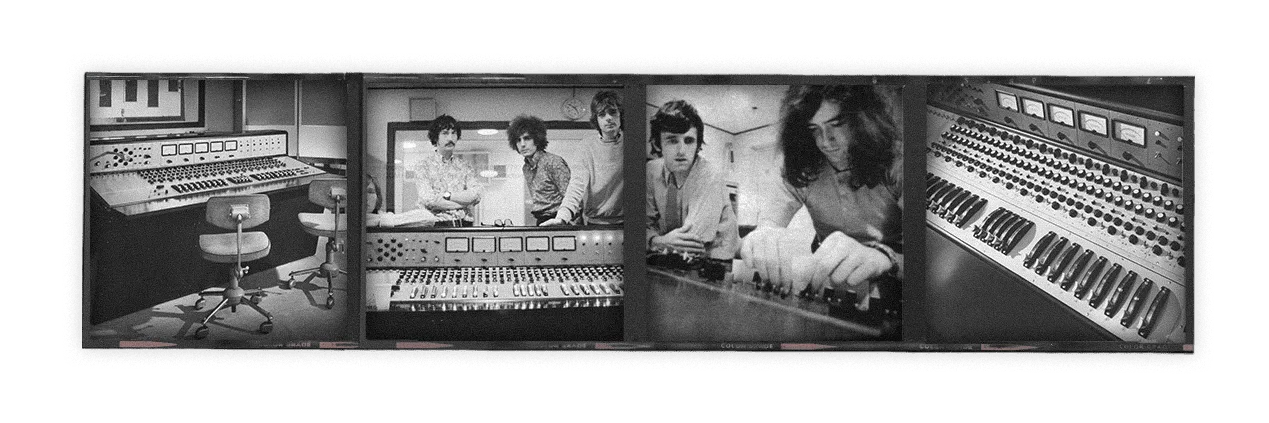
Console: Sound Techniques A-Range / early custom configuration
Rough Service Dates: c. 1965–1971
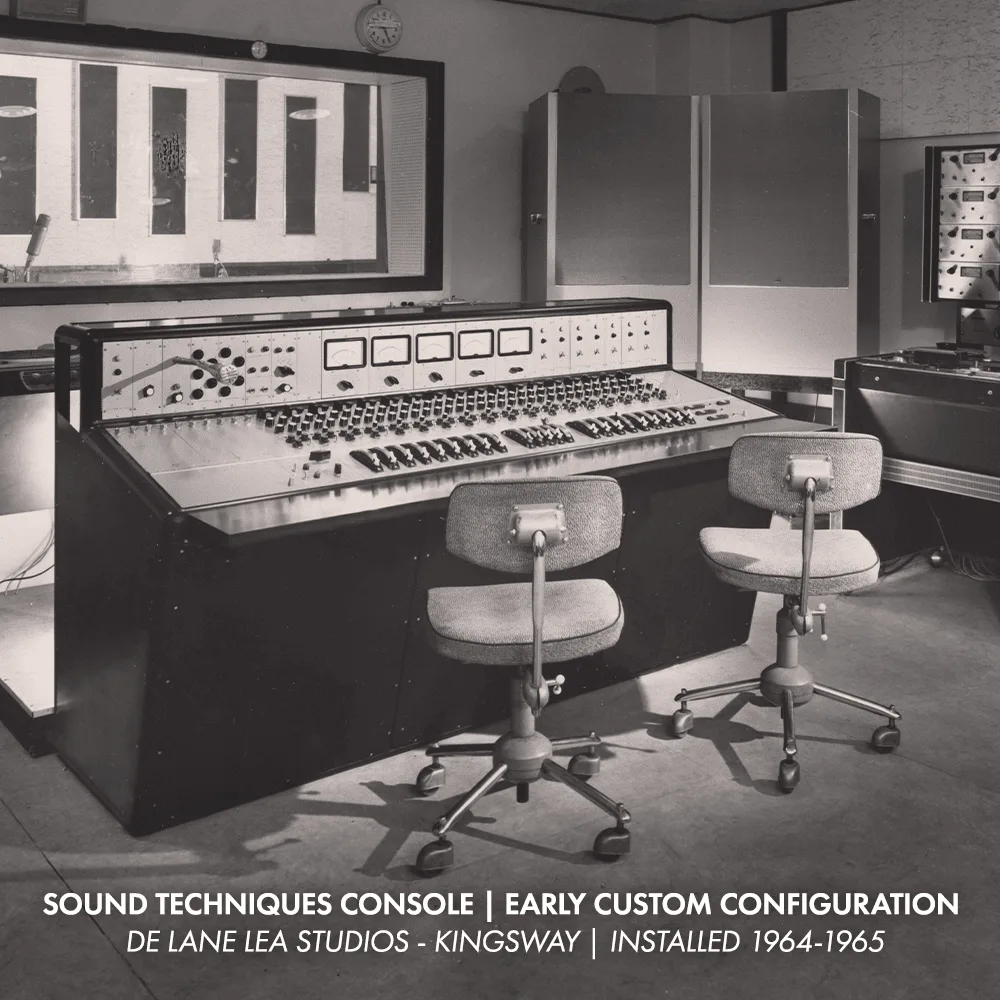
One of Sound Techniques’ earliest outside commissions, the Kingsway console was built by Geoff Frost as De Lane Lea expanded its recording operation in 1964-65. According to “Recording The Beatles” by Brian Kehew & Kevin Ryan (pg 331-333) “The Control Room housed a Sound Techniques desk with 18 inputs and four outputs.” The studio became extremely active during the second half of the 1960s, recording British rock, pop and blues artists outside the major-label studio system.
Notable artists / recordings:
Fleetwood Mac — “Oh Well, Part 1”
Jimi Hendrix Experience — Are You Experienced? sessions
Jeff Beck / Rod Stewart / Ron Wood
Robert Plant with Alexis Korner
The Who
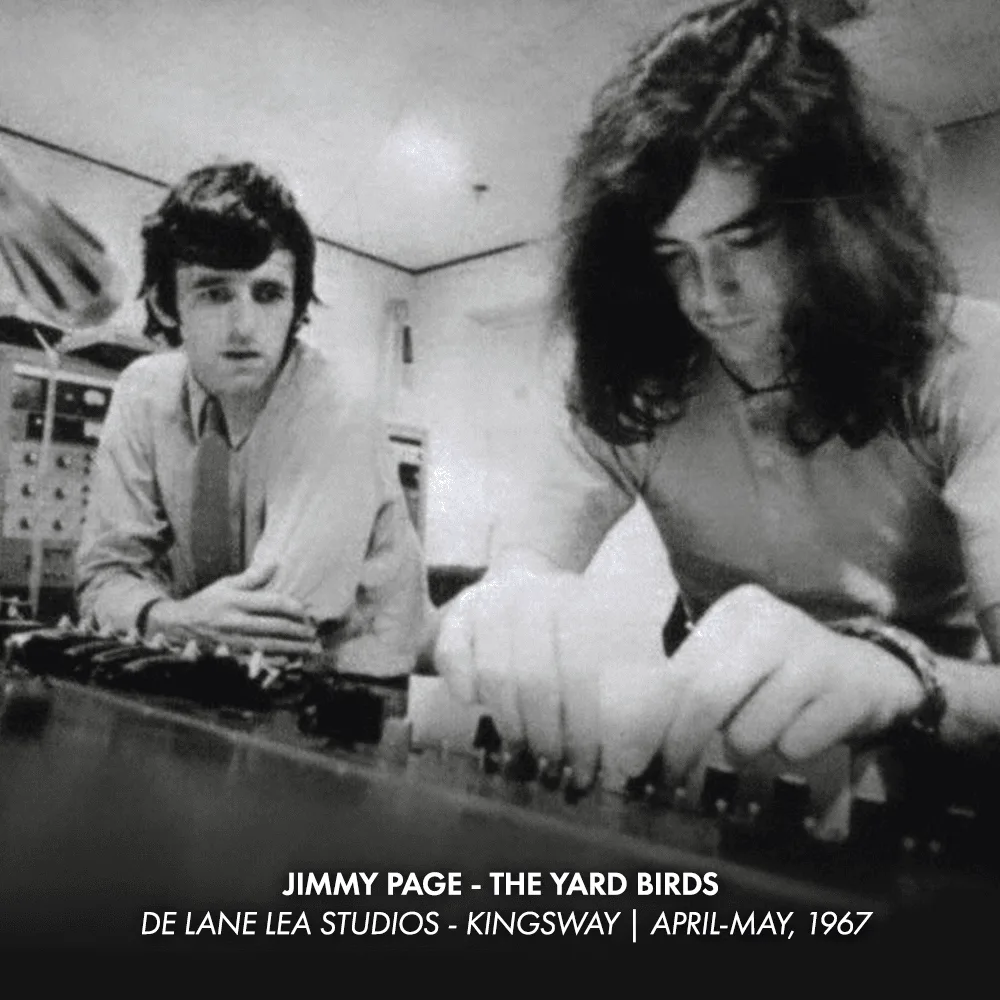
The Yardbirds
Deep Purple
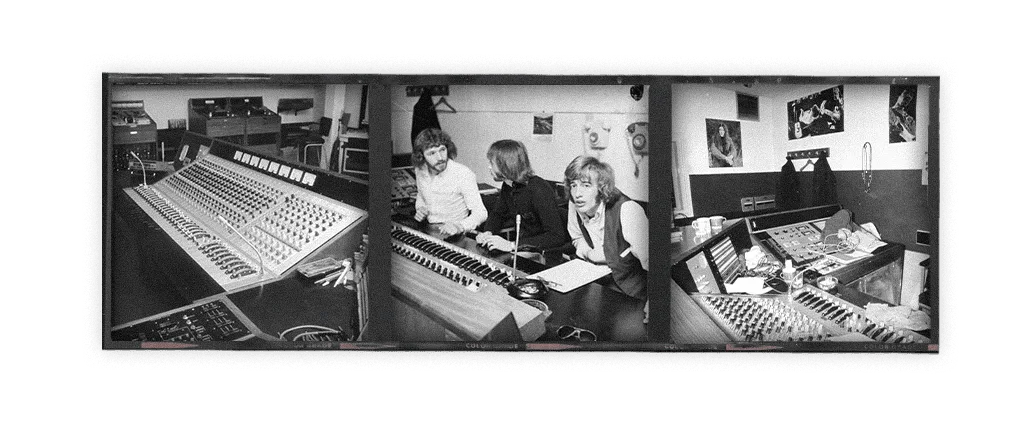
Console: Sound Techniques A-Range, approximately 22×8
Rough Service Dates: c. 1968–1973
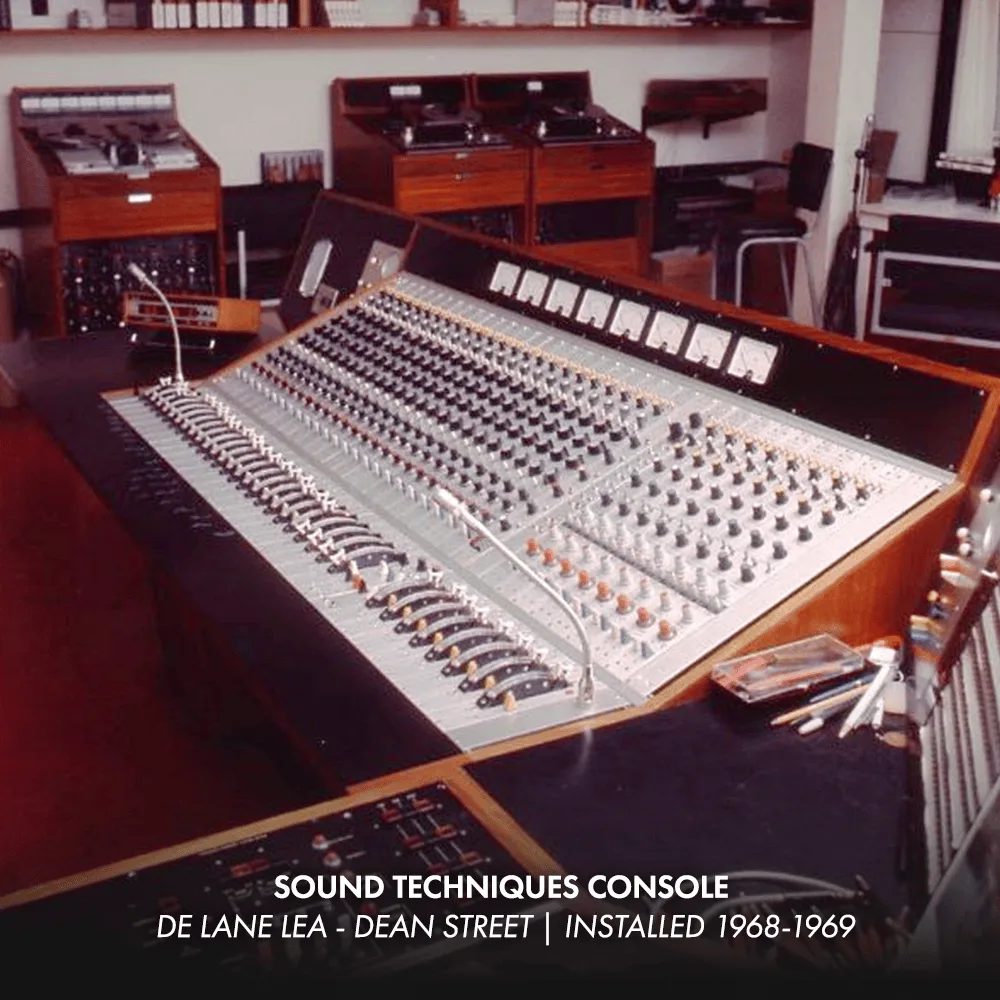
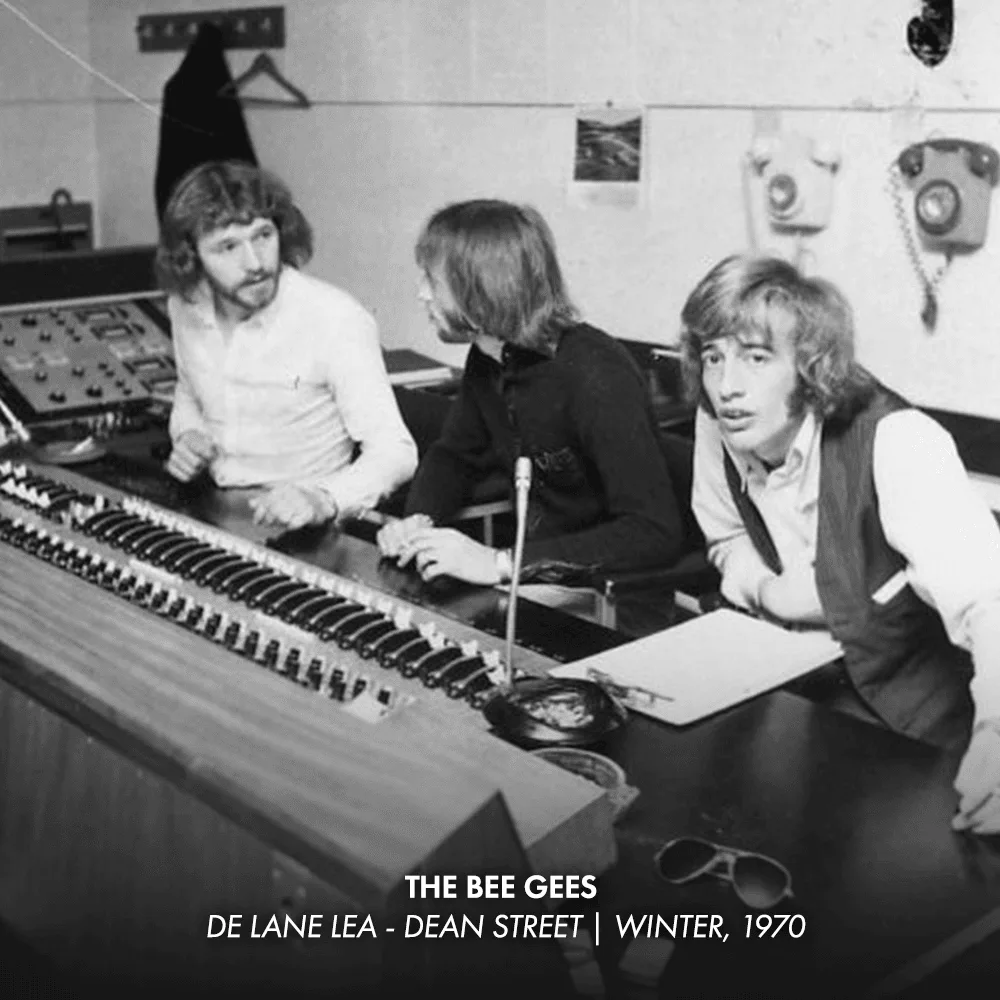
As De Lane Lea expanded, Geoff Frost was again commissioned to build a custom Sound Techniques console, this time for the company’s newly-opened Dean Street facility in March of 1968. Engineer Nick Broome later recalled assisting Frost during construction and installation of the desk. The resulting A-Range became part of another heavily used London independent studio and represents one of the clearest examples of Sound Techniques’ close relationship with De Lane Lea.
Notable artists / recordings:
Bee Gees — Two Years On sessions
Ringo Starr — Sentimental Journey sessions
The Who
Deep Purple
Queen
Numerous film and commercial sessions
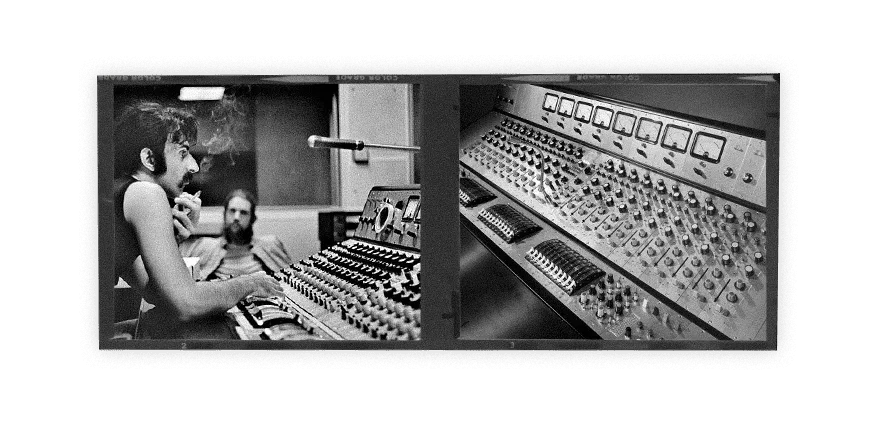
Console: Sound Techniques A-Range
Rough Service Dates: c. 1967–1974
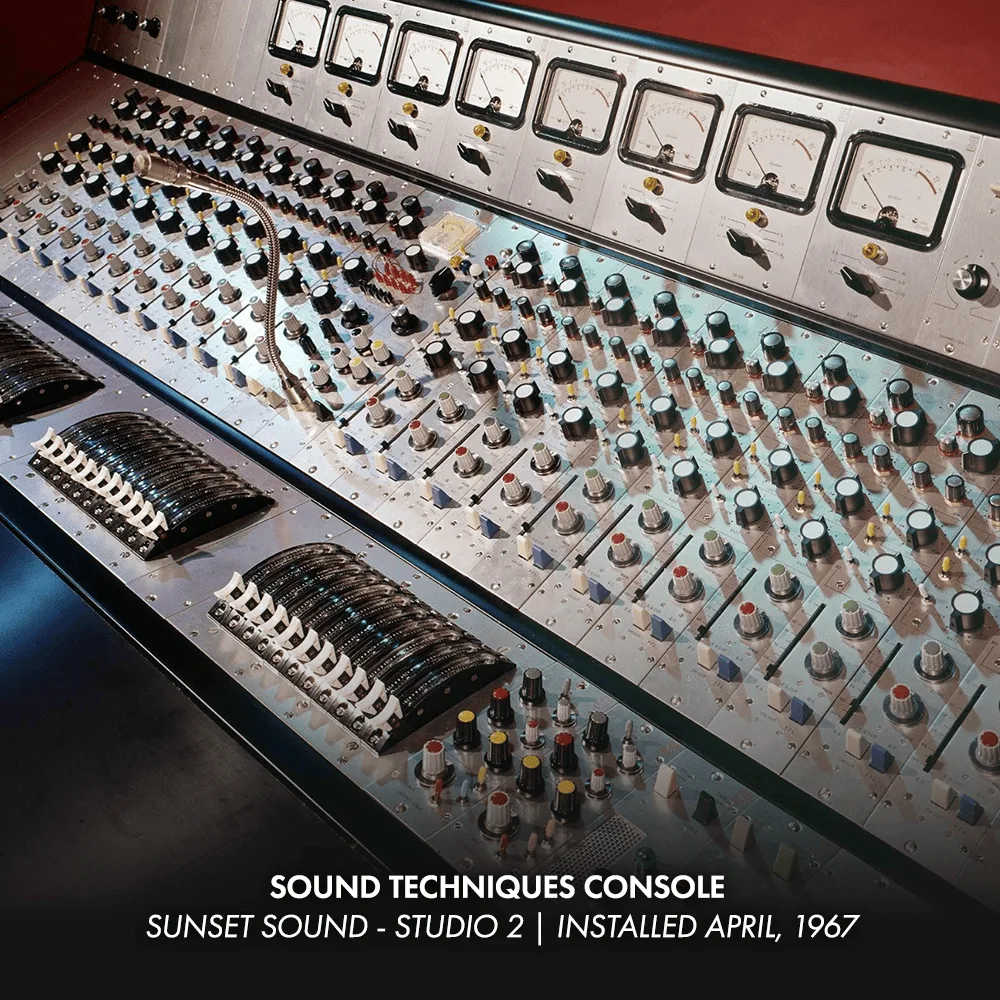
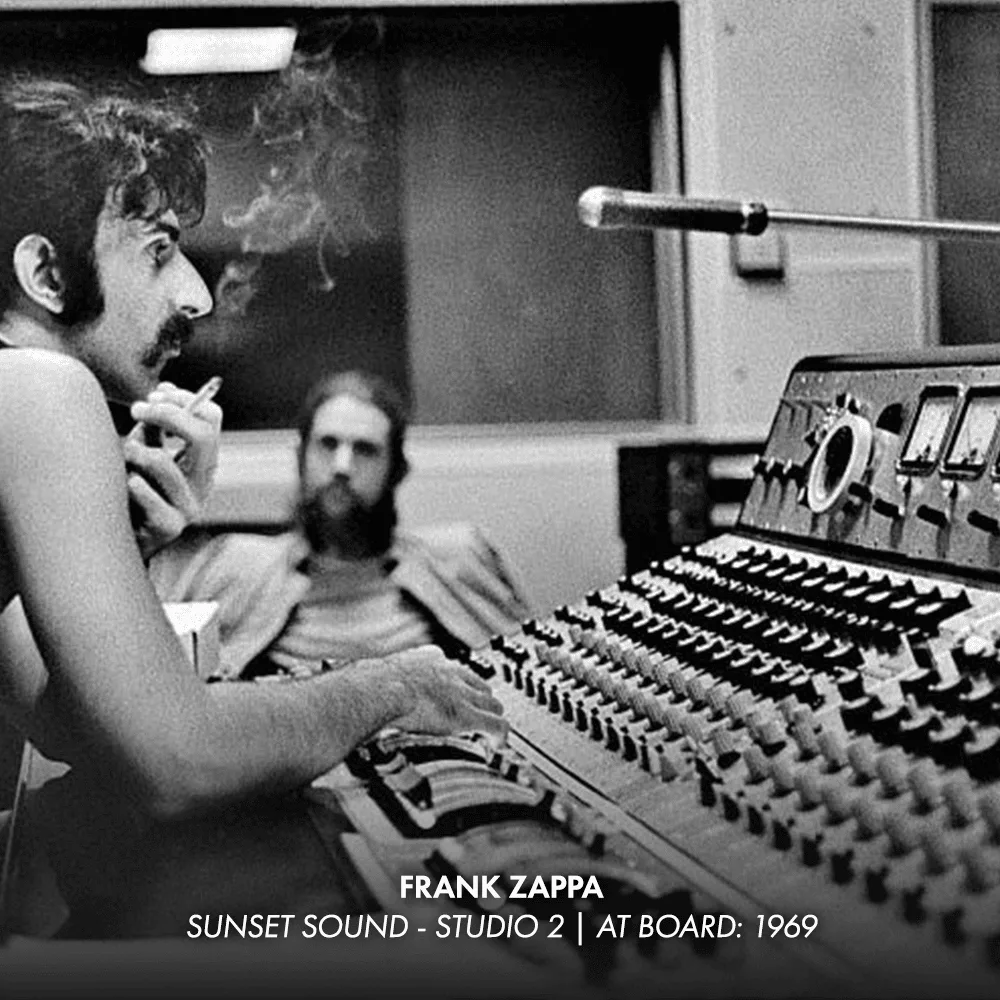
Sunset Sound became one of the earliest major American adopters of Sound Techniques when founder Tutti Camarata purchased a custom Geoff Frost-designed A-Range for Studio 2 in April of 1967. The console was reportedly the first British recording console imported into the United States, preceding the Sound Techniques desks at Elektra and Trident. Its installation placed the emerging Sound Techniques design at the heart of one of Hollywood’s most important recording facilities during the explosion of late-1960s rock.
During its service at Sunset Sound, the console was used for recording and/or mixing work associated with The Doors, Love, Van Dyke Parks, The Rolling Stones, and other major artists. The Doors’ Waiting for the Sun sessions are particularly notable, while Love’s Forever Changes and Van Dyke Parks’ Song Cycle were mixed through the Sound Techniques desk. “When The Levee Breaks” from Led Zeppelin IV was mixed at Sunset studio 2 as well.
Noted Artists & Recordings
The Doors — Waiting for the Sun
Love — Forever Changes (Mixing)
Van Dyke Parks — Song Cycle (Mixing)
The Rolling Stones — Exile on Main St (Mixing)
Led Zeppelin — “When The Levee Breaks” (Mix)
Additional Sunset Sound rock and pop sessions of the late 1960s/early 1970s
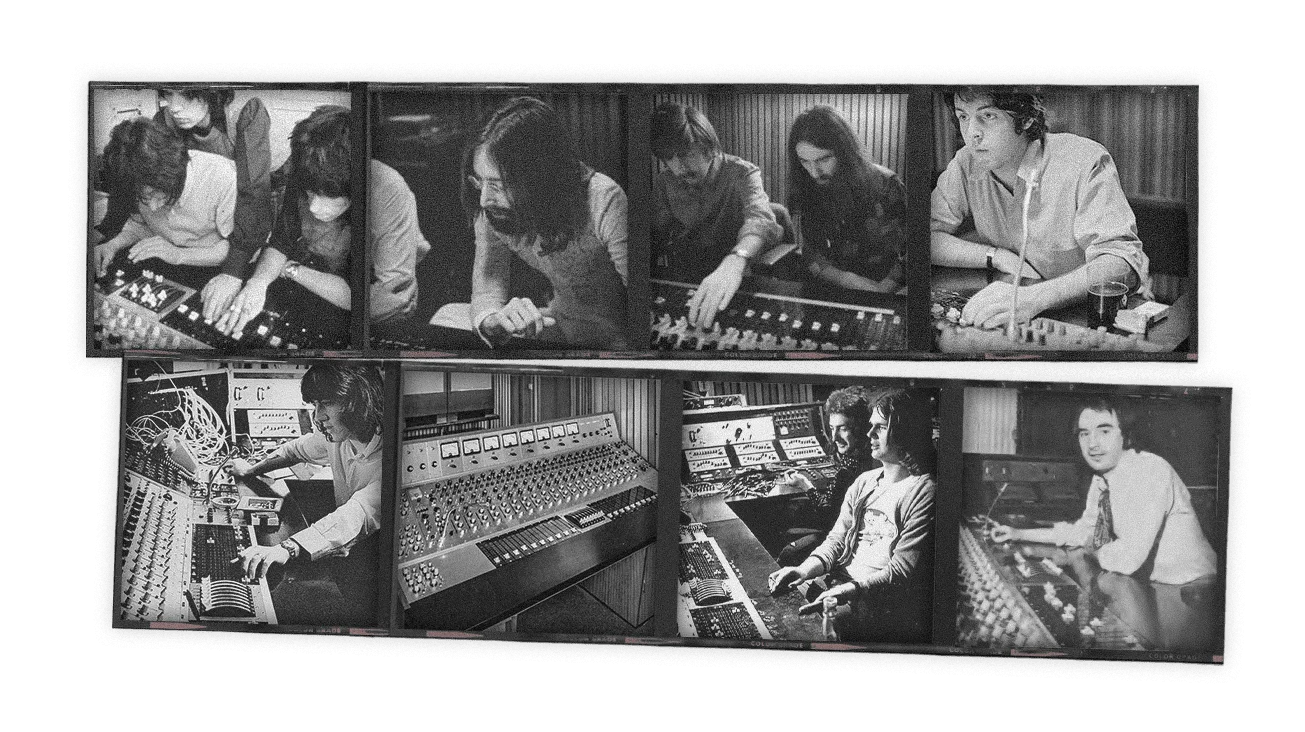
Console: Sound Techniques A-Range 8-track, followed by second 16-track Sound Techniques A-Range
First Console Installed: 1968
Second Console: c. late 1969
Rough Service Dates: 1968–1977
Primary Tracking Role: 1968–c. 1972
Remix/Mixing Room: c. 1969–1977
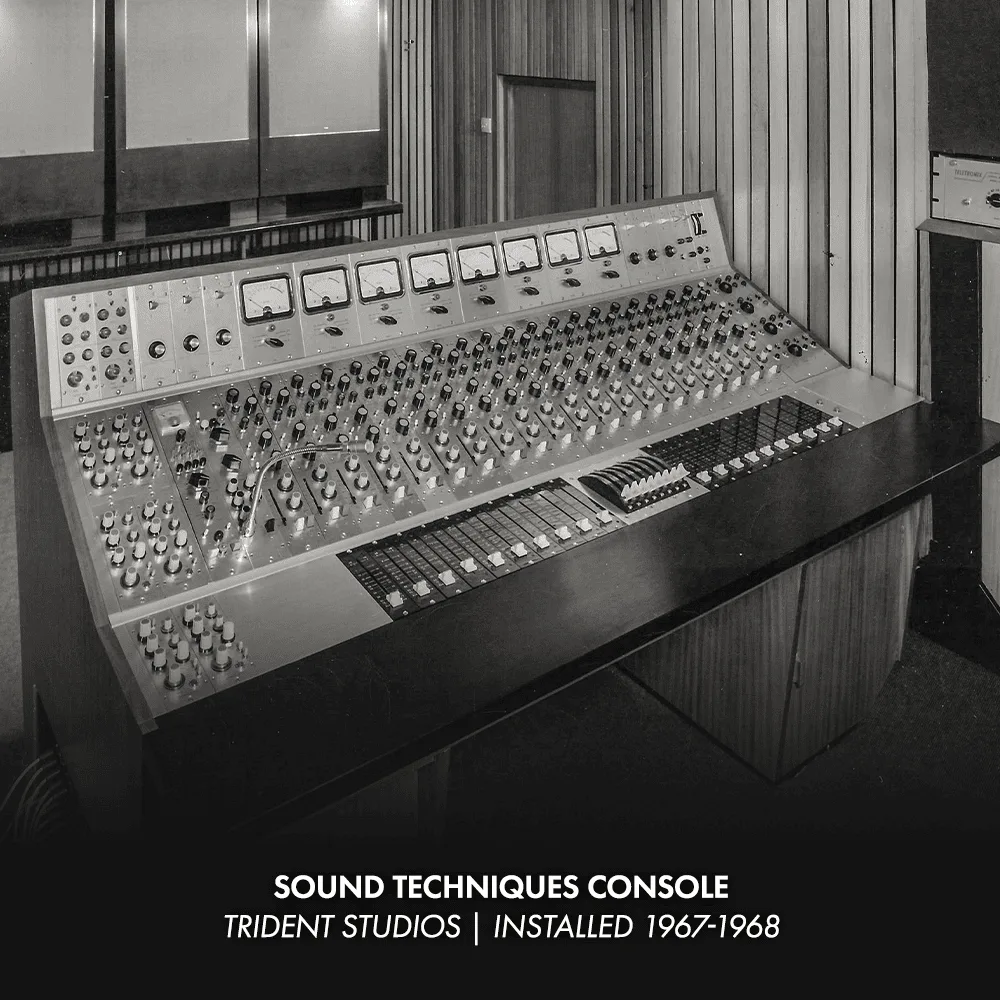
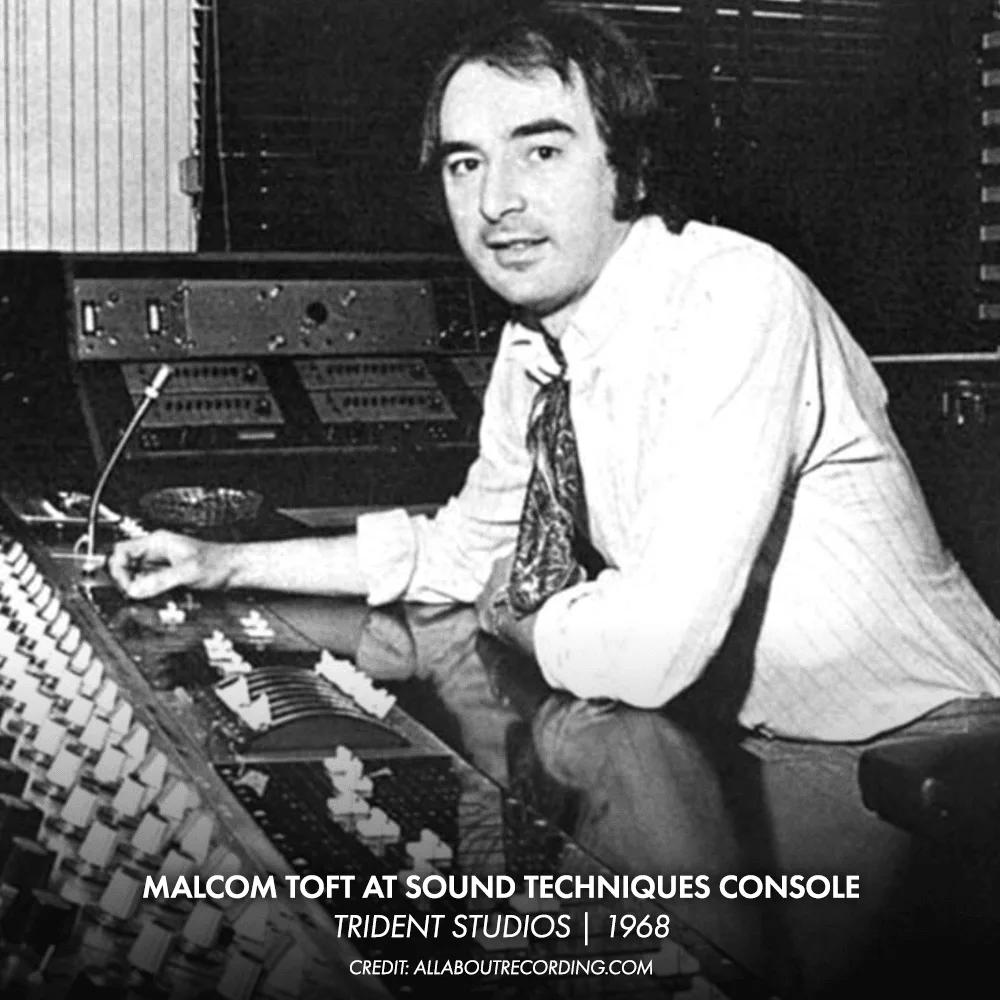
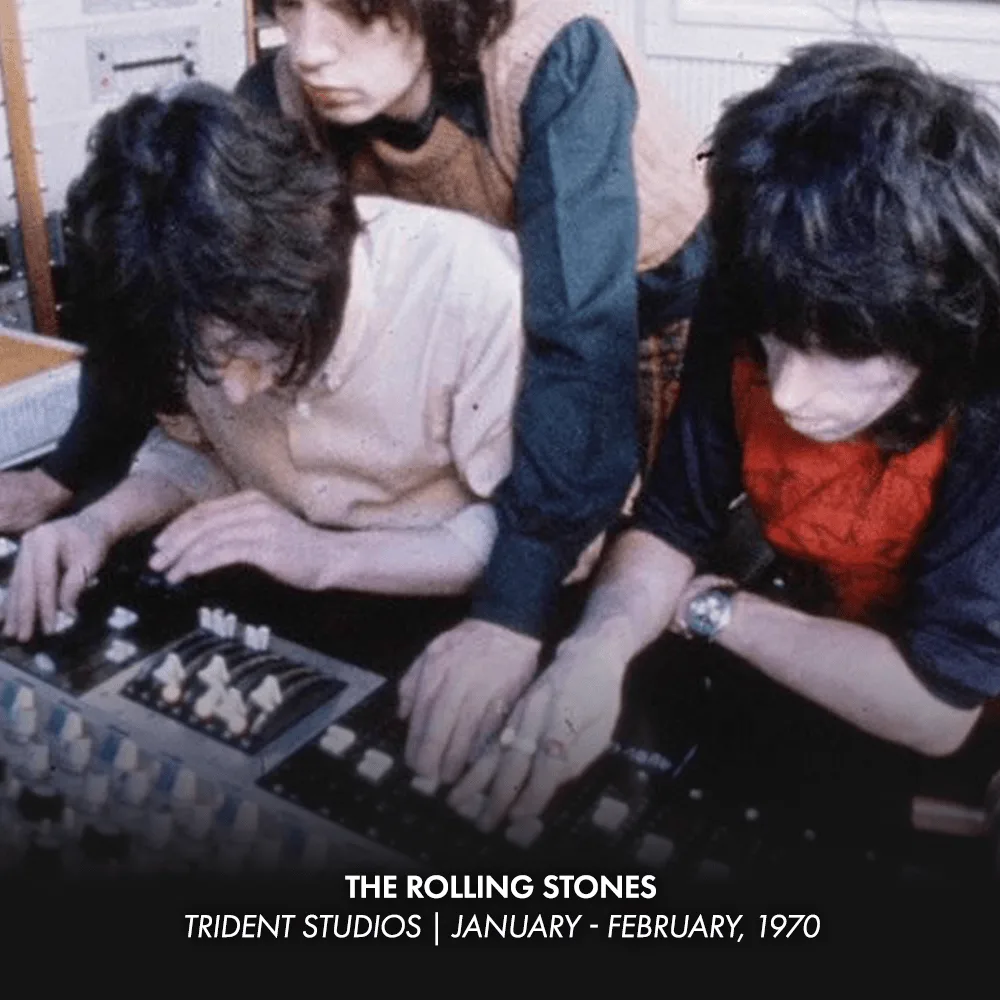
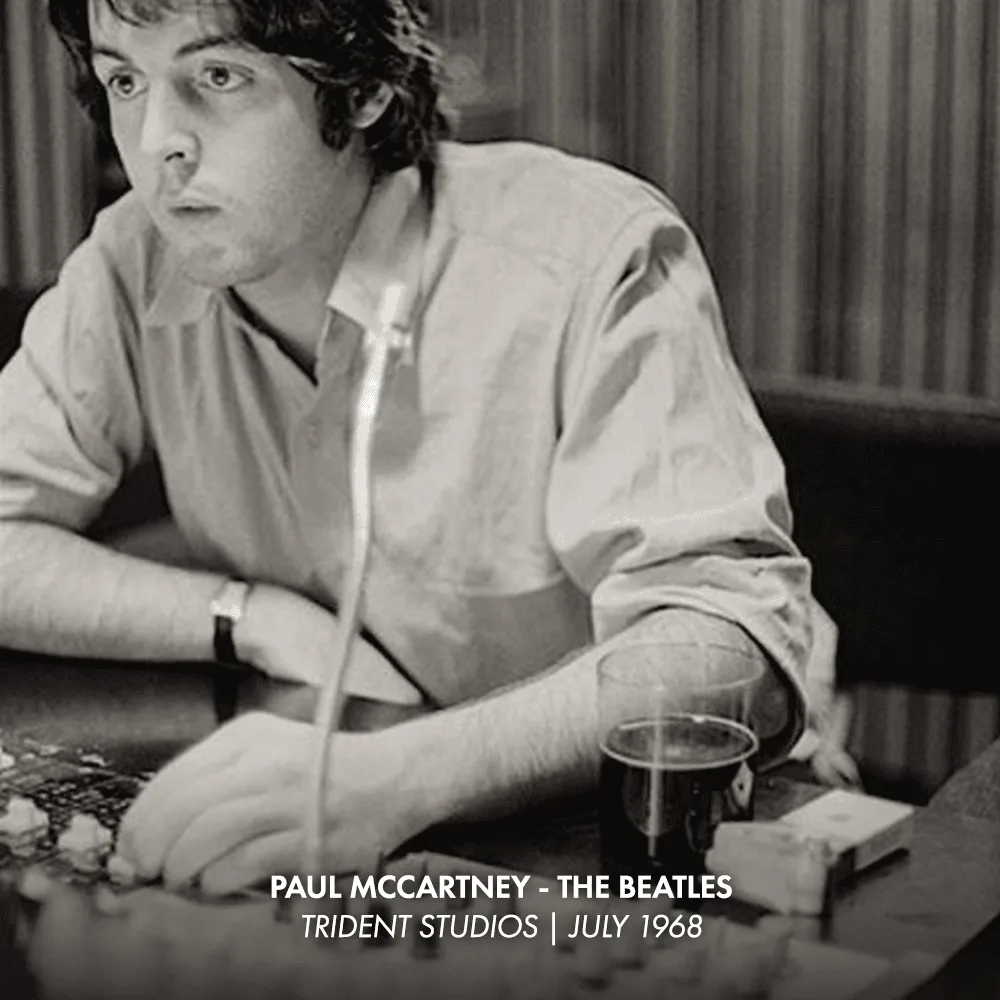
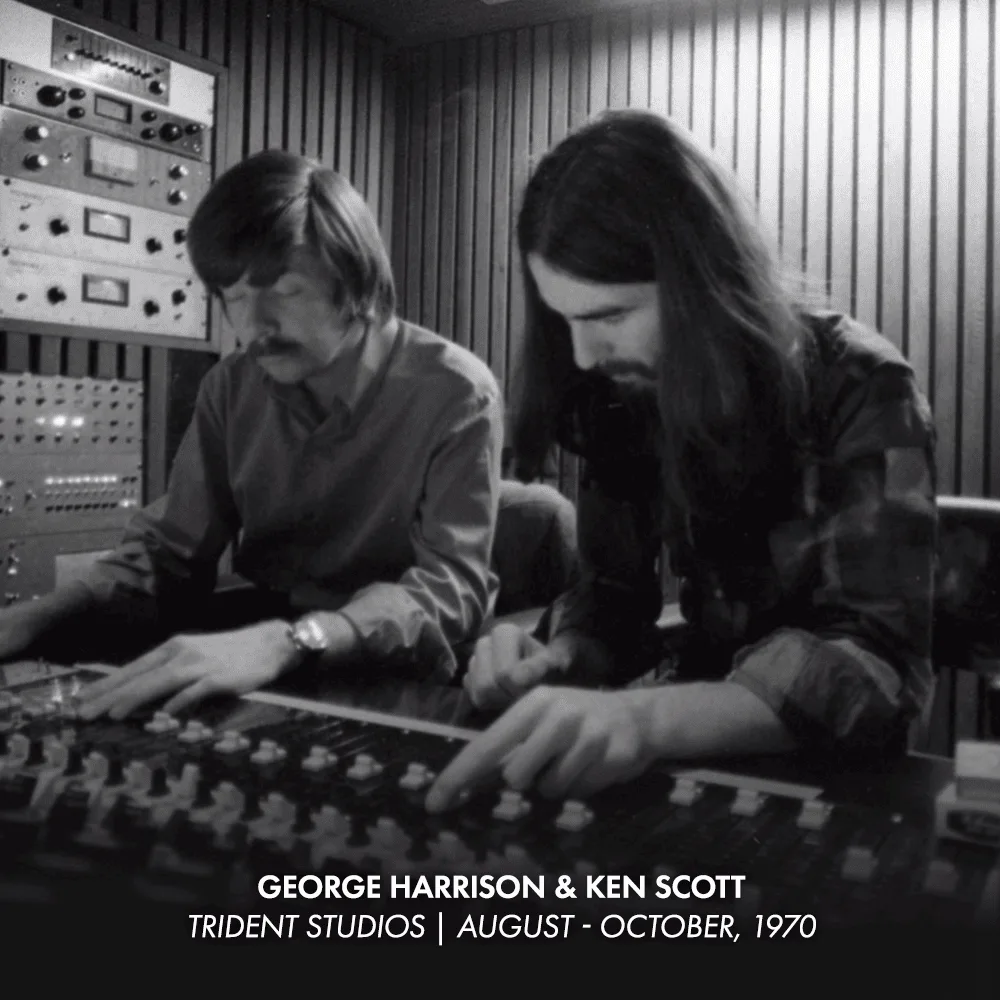
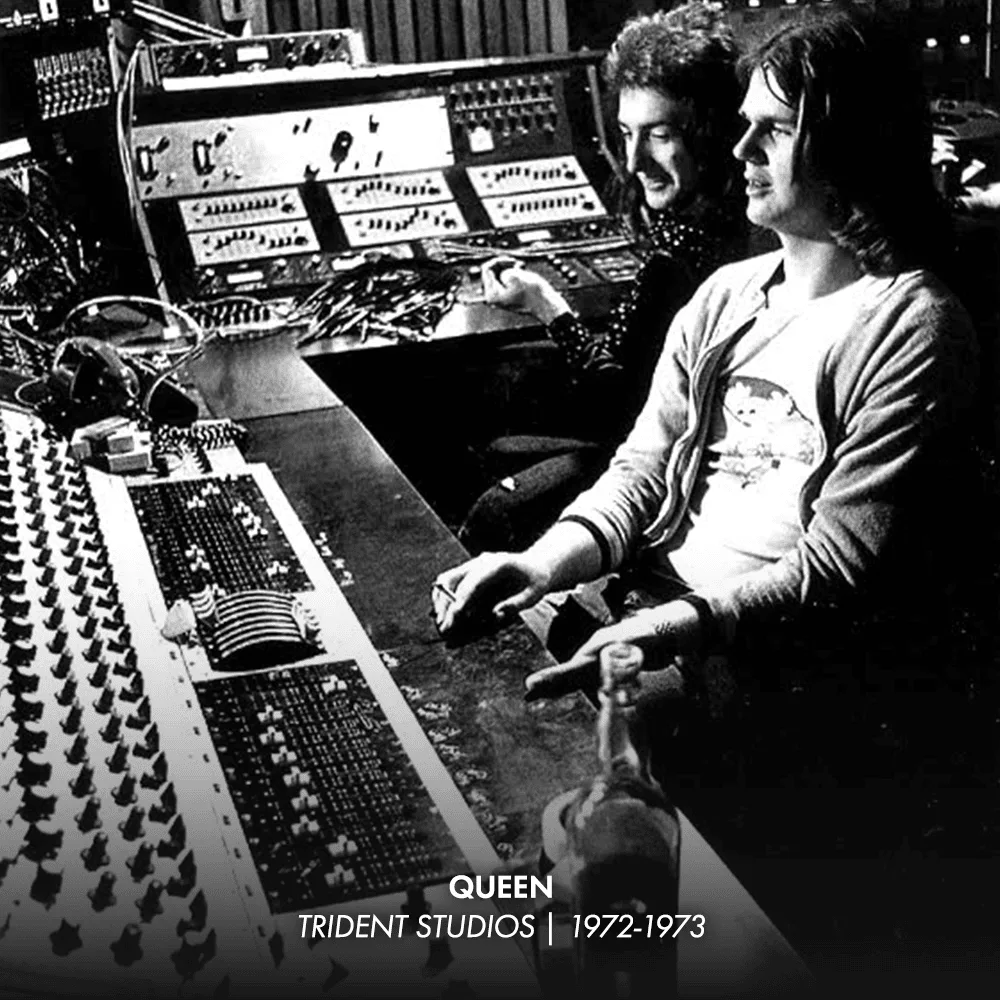
Trident Studios opened in 1968 after Trident’s preview theater opened in ‘67. The Trident recording studio opened in February of 1968 with a Geoff Frost-built Sound Techniques A-Range console that was built for eight-track recording. In April of 1969, the original 8-track Sound Techniques console moved into Trident’s new remix room and a second 16-track Sound Techniques desk became the primary recording console until 1972, according to to “Recording The Beatles” by Brian Kehew & Kevin Ryan (pages 336-340) The first 8-track Sound Techniques console was moved into the mix room in April of 1969 and stayed in service in the mix room until July of 1976.
Trident Audio Development: It was not until 1971-1972 (pg. 42) that Trident replaced the main-room 16-track Sound Techniques desk with its internally developed desk that they confusingly also dubbed the “A-Range.” Engineer Ken Scott recalled that recordings passed successively through the two Sound Techniques desks before the Trident prototype appeared in ‘71-‘72, while mixes continued through the original Sound Techniques console through 1976.
Notable artists / recordings / mixes:
The Beatles — “Hey Jude”
The Beatles — White Album sessions
The Beatles — “I Want You (She’s So Heavy)”
Mary Hopkin — “Those Were the Days”
George Harrison — All Things Must Pass — mixing
Ringo Starr — “It Don’t Come Easy”
David Bowie — Hunky Dory / Ziggy Stardust-era recordings and mixes
David Bowie — “Suffragette City” — mix
Elton John — early Trident recordings
Elton John — “Saturday Night’s Alright for Fighting” — mix
Queen — “Keep Yourself Alive”
Queen — “Killer Queen” — mix
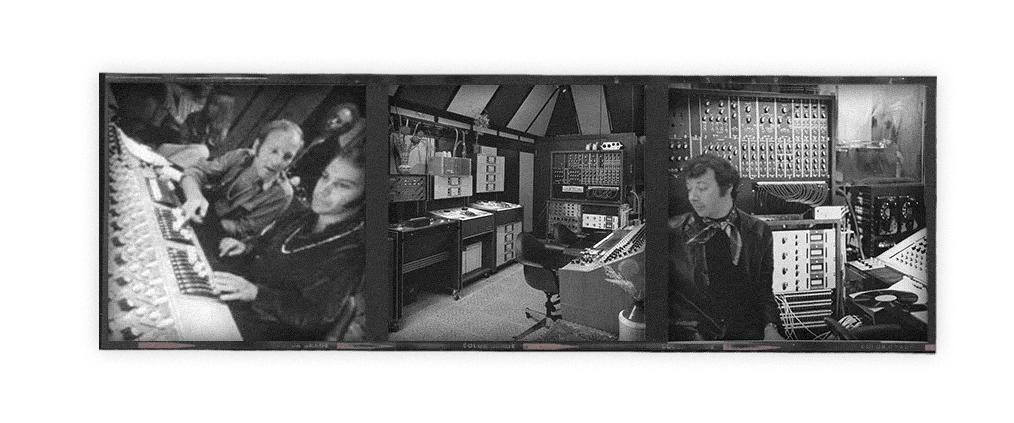
Console: Sound Techniques A-Range, approximately 22 inputs
Rough Service Dates: 1968–c. 1974
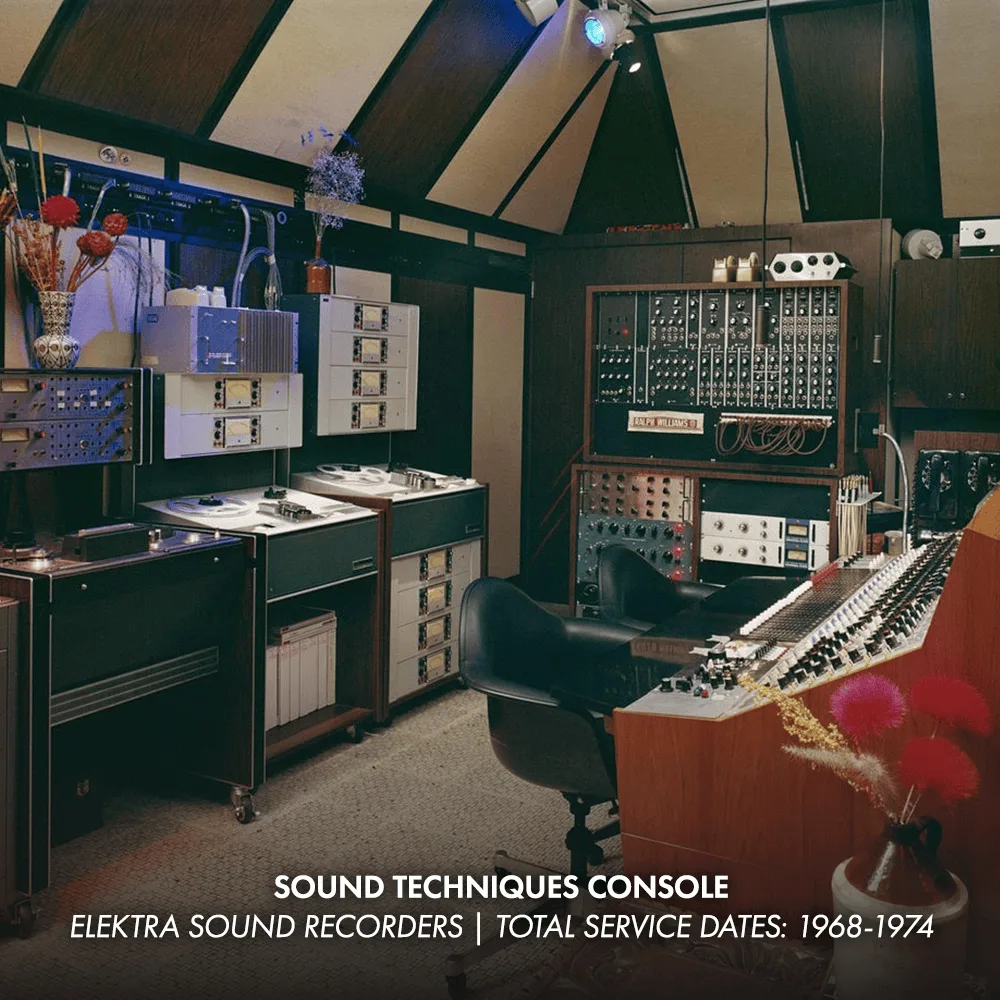
After Sunset Sound purchased the first Sound Techniques A-Range exported to the United States, Elektra founder Jac Holzman ordered the second Sound Techniques console for the newly constructed Elektra Sound Recorders. Installed in August of 1968, the approximately 22-input desk was ordered to deliver the world-class tone of the 20-input Sound Techniques console installed at Trident studios. Elektra became one of Los Angeles’ most important label-owned studios, with engineer Bruce Botnick among the major figures associated with the facility.
Notable artists / recordings:
The Doors — The Soft Parade
The Doors — Morrison Hotel
The Doors — “Wild Child”
The Rolling Stones — Let It Bleed sessions
The Stooges
Judy Collins
Tim Buckley
Bread
Delaney & Bonnie
Dave Mason — Alone Together
Rhinoceros
Roxy
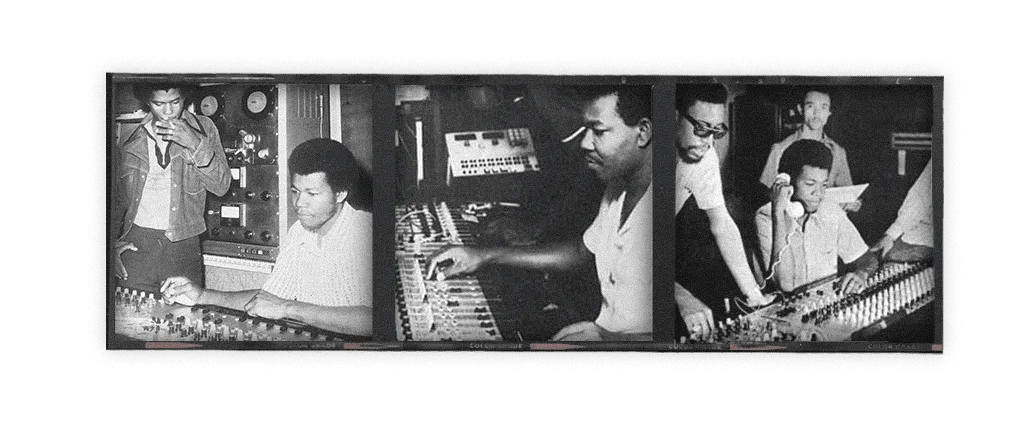
Console: Sound Techniques System 12
Rough Service Dates: c. 1970–1981
Randy’s Studio 17, founded by Vincent “Randy” Chin above Randy’s Record Mart, became one of the most important recording facilities in Jamaican music. Its compact Sound Techniques System 12 arrived around 1970, just as reggae was developing into an international musical force. The desk became part of an extraordinary period of Jamaican recording encompassing early roots reggae, dub and internationally successful sessions.
Notable artists / recordings:
Bob Marley & The Wailers — Catch a Fire sessions
Lee “Scratch” Perry
Dennis Brown
Bunny Lee
Niney the Observer
Augustus Pablo
Burning Spear
Gregory Isaacs
Joe Cocker
Quincy Jones
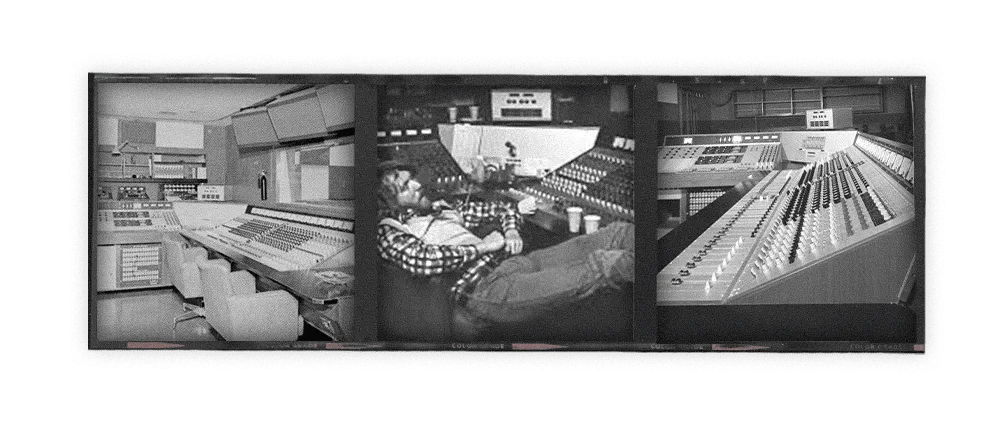
Console: Sound Techniques A-Range
Rough Service Dates: c. 1971–late 1970s
Later History: At least one Wembley Sound Techniques A-Range subsequently went to Fastbuck Studios
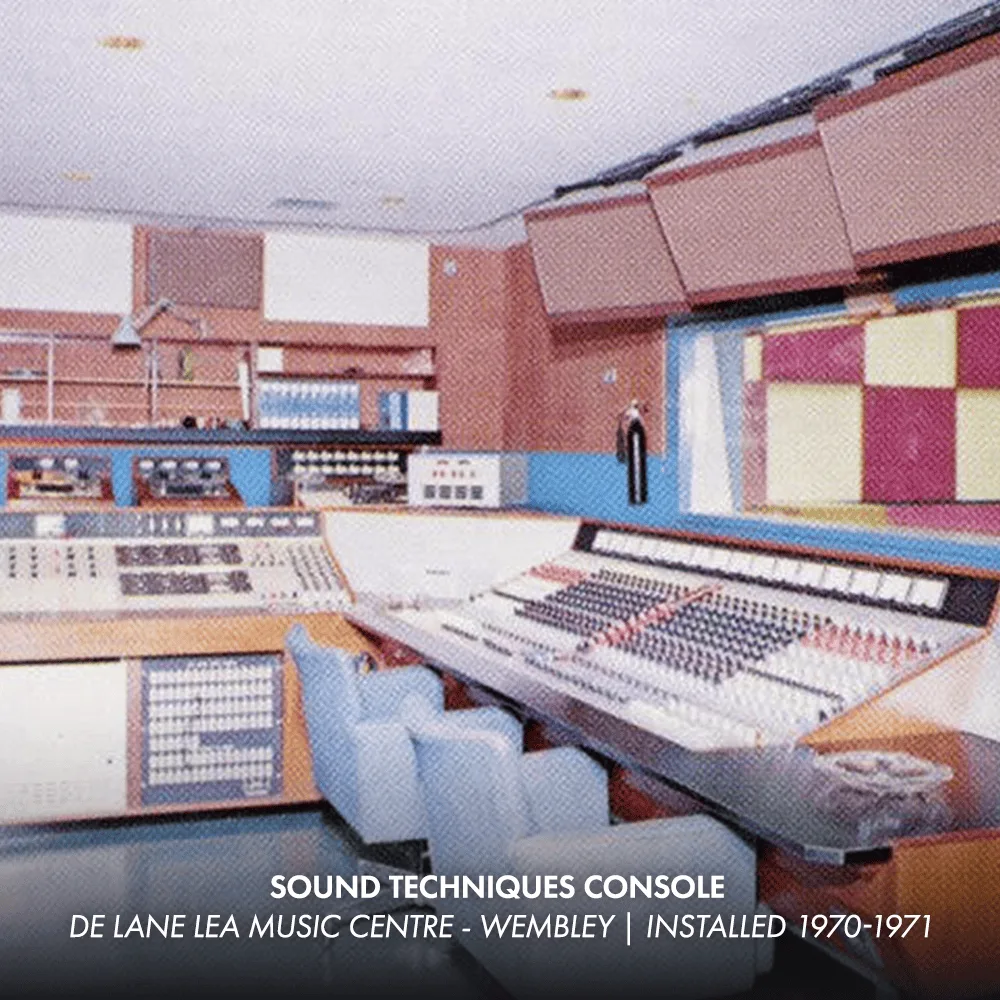
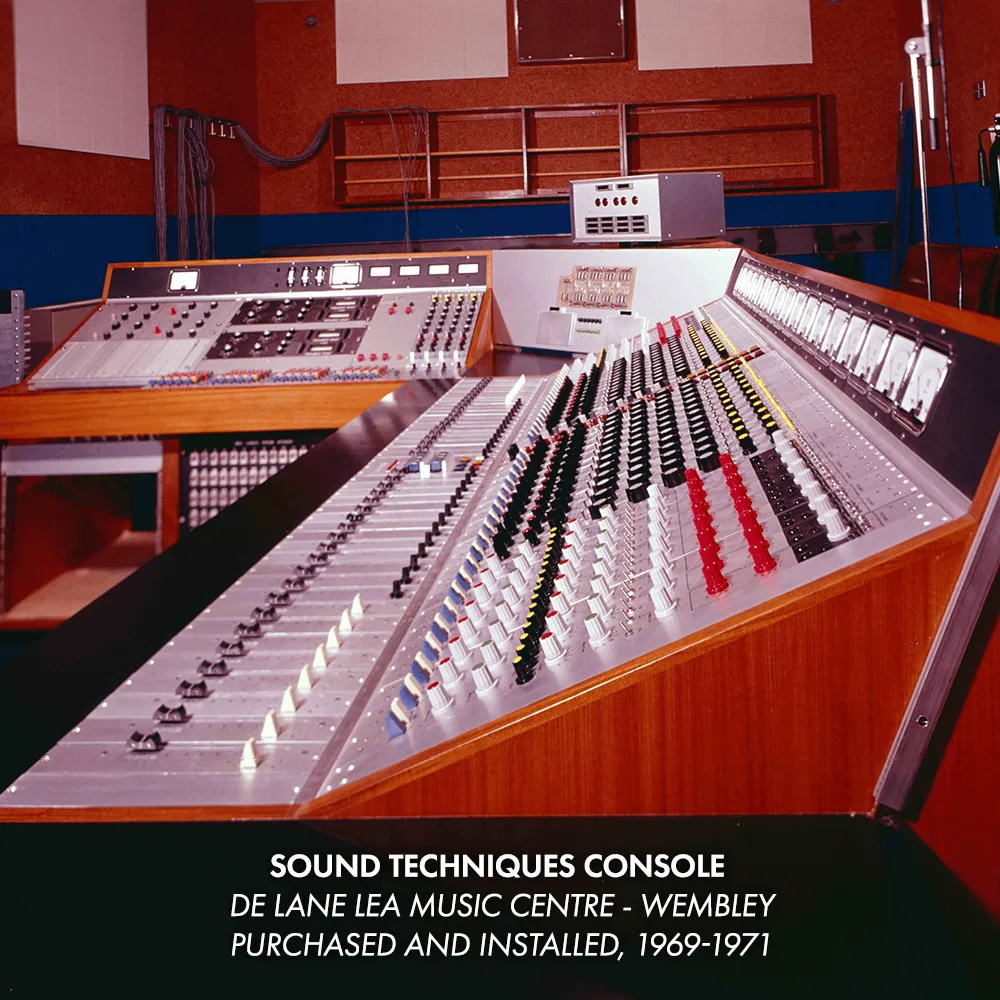
De Lane Lea’s large Wembley Music Centre, completed, autumn of 1971 (pg. 38), represented another major Sound Techniques installation and continued a relationship that stretched back to Kingsway. According to Studio Sound, March 1973 issue, “Sound Techniques' biggest project has been the De Lane Lea building at Wembley…Work started on August 6, 1969, and the project was finished in the autumn of 1971.” The facility contained multiple studios designed for everything from rock recording to orchestral and film work. Documented consoles from Wembley demonstrate the scale of the installation, ranging from a 20×8 A-Range from Studio 5 to a larger 26×16×8 console built in 1971.
Notable artists / recordings / mixes:
Deep Purple — “Smoke on the Water” — mix
John Barry / Lulu — “The Man with the Golden Gun” — mix
Deep Purple
Queen
Film-score and orchestral sessions
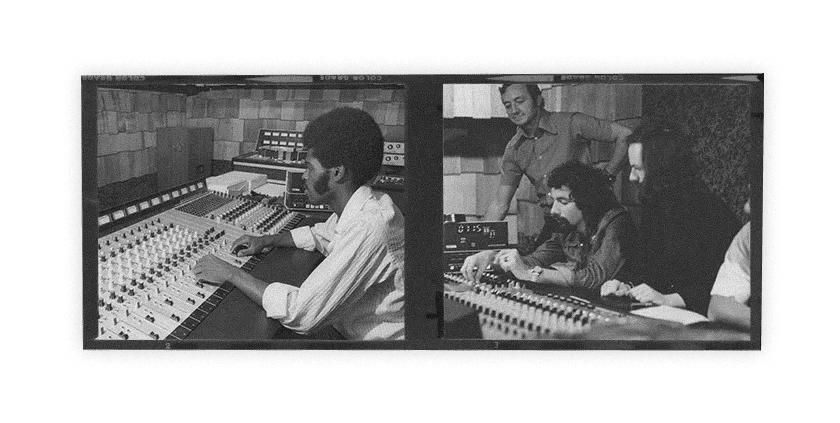
Rough Service Dates: c. 1972–1980s
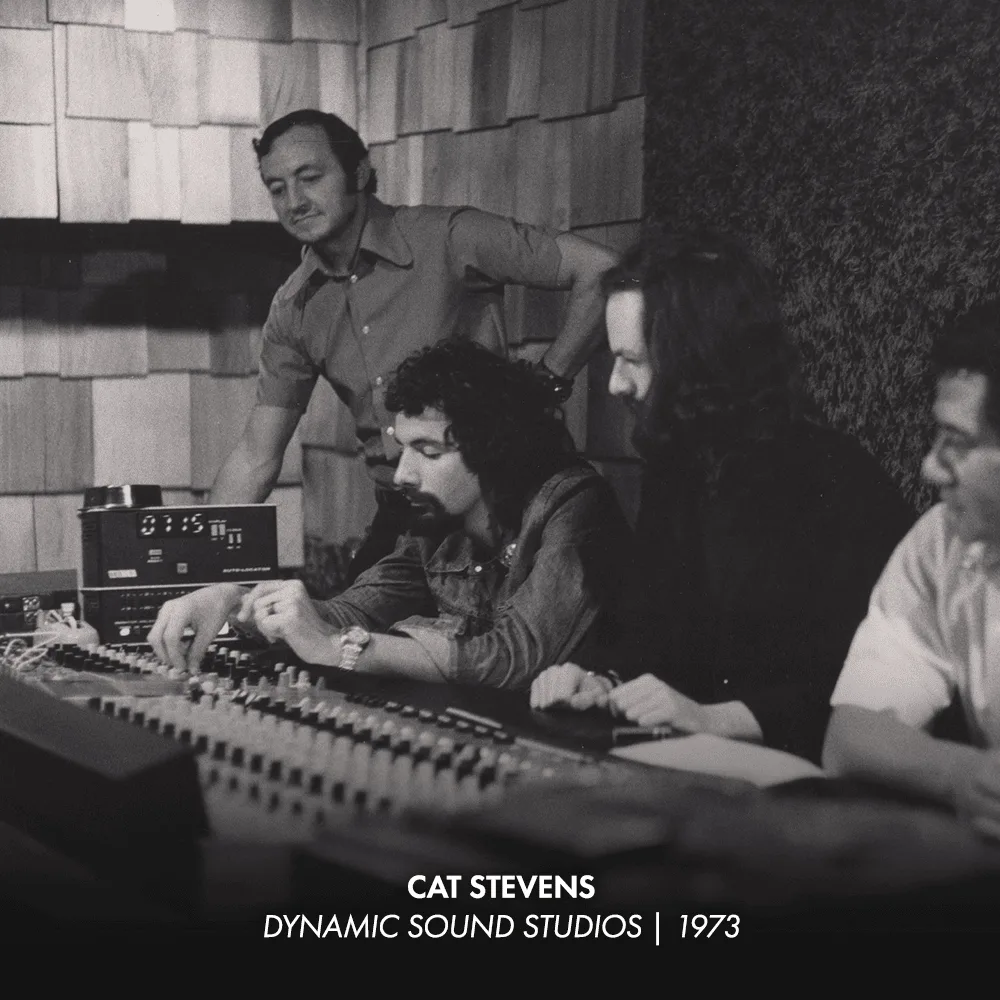
Dynamic Sound Studios became an important Sound Techniques installation (1970-1971) when The Rolling Stones purchased a System 12 console for the Kingston studio for the 1972 Goats Head Soup sessions. The Stones block-booked Dynamic in late 1972, recording the album’s Jamaican backing tracks there with producer Jimmy Miller and engineer Andy Johns. The System 12 remained at Dynamic after the sessions and was later used on additional Jamaican and international recordings. Sound Techniques documentation identifies the console as remaining in use at Dynamic into the 1980s before eventually moving to Joe Gibbs’ studio.
Noted Artists & Recordings:
The Rolling Stones — Goats Head Soup, later Tattoo You source recordings
Paul Simon — “Mother and Child Reunion”
Jamaican reggae sessions
Hit / Notable Songs:
The Rolling Stones — “Angie,” “Doo Doo Doo Doo Doo (Heartbreaker),” “Dancing with Mr. D,” “Winter,” “Coming Down Again,” “Star Star”; later Stones recordings associated with the Dynamic sessions include “Waiting on a Friend” and “Tops”